
Evaluating Submersible Pump Suppliers: How to Verify Materials and Motor Types
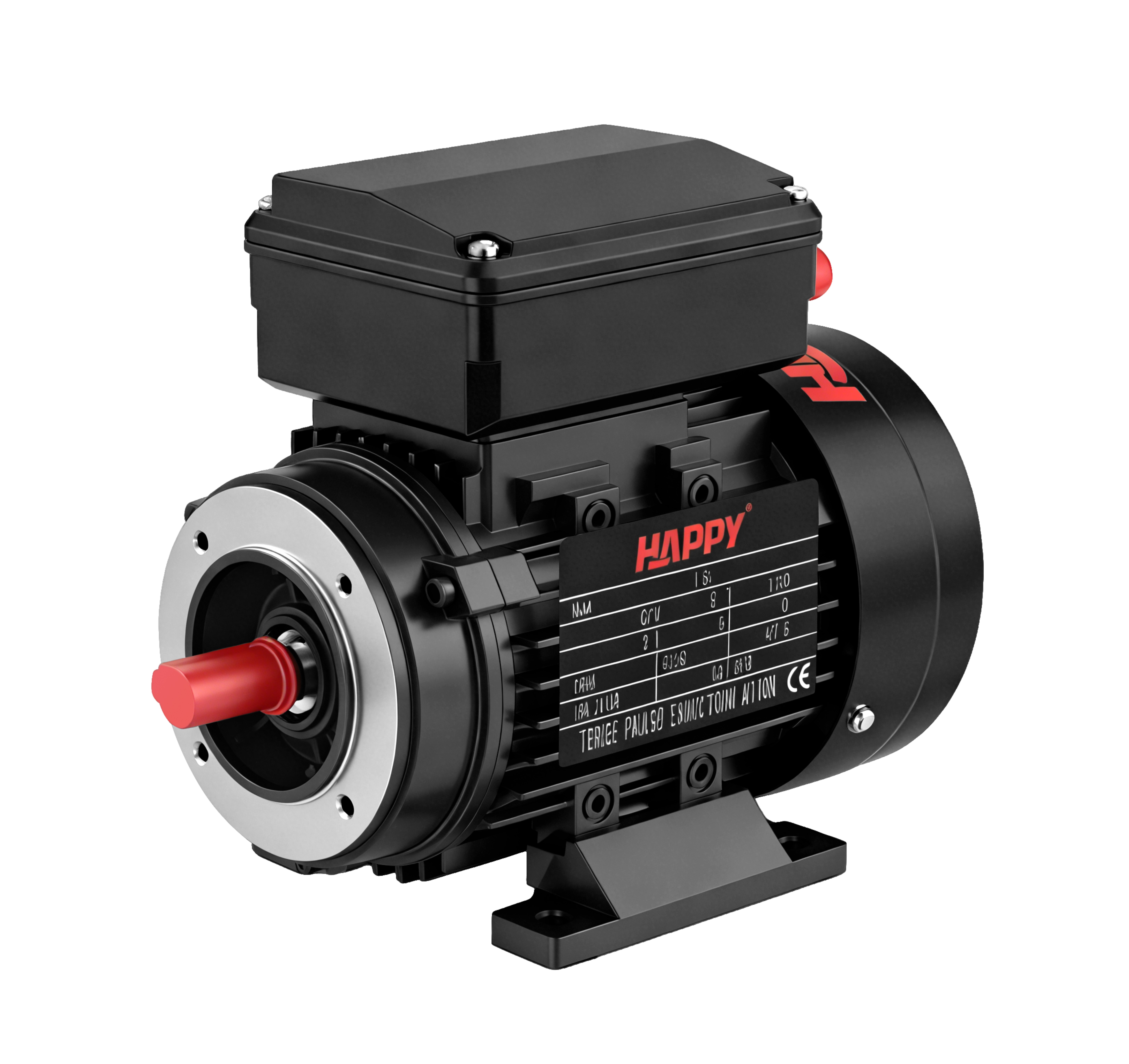
Motor units in the 1–430 HP range are offered with cast iron or aluminum housings and IE2, IE3, IE4 or MS type designations — all three details must be fixed in writing before a batch is produced.
A submersible pump supplier can be verified before a deposit is paid, using three categories of written evidence: a component-level material declaration (cast iron, stainless steel or engineering plastics on the pump side; cast iron or aluminum on the motor side), the motor designation the factory actually intends to build (efficiency classes such as IE2, IE3, IE4 and MS, with frame designations such as 90S-6 and 90L-6), and the exact series name that will appear on the nameplate, the carton and the packing list — QDX series, QDP series, HQBm, QB60, IDB35, HPSm-AX or HRSm-A.
This guide is written for importers, distributors, brand owners, engineers and procurement managers who are at the research and evaluation stage of a submersible pump project. Its purpose is narrow: to convert a category-level request such as “send me your submersible pump price” into a component-level specification that a factory can either confirm in writing or decline, and to give the buyer a checklist of documents to request at each stage of the evaluation.
The reason this matters is that a mismatch is rarely visible at the container door. A unit built with a different motor housing material, a different efficiency class or a different member of the same pump family can look almost identical to the agreed item. The gap usually surfaces later — at installation, in a warranty discussion, or when the finished product no longer matches the datasheet the buyer published.
Where supplier claims and delivered batches drift apart
Material and motor mismatches are not usually the result of a deliberately false quote. They are the result of an underspecified purchase order that both sides interpreted differently. The six patterns below account for most of the drift between what a buyer believes was agreed and what is unloaded.
- A category-level order line. The description says “submersible pump” and nothing else. Because a single manufacturer may build surface pumps, submersible pumps, deep well pumps, solar pumps, centrifugal pumps, self-priming pumps, pressure tanks, swimming pool pumps, multistage pumps and sewage pumps, a category name does not identify a product.
- Motor housing material ambiguity. Motors in a typical catalogue are offered in both cast iron and aluminum. Both are legitimate, so both can be delivered under the same order line — the failure is that the buyer never recorded which one is required for the application.
- Efficiency class drift. Where IE2, IE3, IE4 and MS classes are all available, a quotation written as “3-phase motor” leaves the class open. A change of class is a change of product.
- Series substitution inside one family. A pump range may include HQBm, QB60, IDB35, HPSm-AX, HRSm-A, QDP series and QDX series. These are separate designations, and a buyer who specified the application rather than the series has effectively left the choice open.
- Envelope mismatch inside an approved family. Even a correct series can be ordered at the wrong duty point. The published envelope for the range spans 0.25–550 kW, heads of 20–100 m, flows of 1.5–5,500 m³/h and protection from IP44 to IP68, so “same family” is not the same as “same specification”.
- Accessory and batch mixing. Submersible systems require supporting equipment such as motors, pressure tanks or pressure control units, controllers, junction boxes and filters. If the accessory list is not fixed in the order, and if the batch released for shipment is not identified per model, a container can carry units that do not match the agreed configuration.
Each of these six failures is preventable with documents that a competent manufacturer already holds. The rest of this article defines what to ask for and how to read the answers.
Why material and motor verification has become a routine procurement step
Submersible pumps are a large and geographically concentrated category. Grand View Research valued the global submersible pump market at USD 13.3 billion in 2025, projecting USD 19.4 billion by 2033, while SNS Insider reported USD 14.75 billion for 2024 with a path to USD 23.07 billion by 2032. Those baseline figures differ by several billion dollars depending on the agency, which is itself a practical lesson for buyers: attribute every market number to a named source rather than repeating it unattributed.
The demand is not evenly distributed. Fortune Business Insights reported that Asia Pacific held a 39.72% share of the submersible pump market in 2025, a value of USD 7.05 billion, and Grand View Research identified the borewell segment as the largest application share at 46.7% in 2025. Electric drive accounted for roughly 80% of global installations in 2024, according to Grand View Research, and the same source valued electric submersible pumps in agriculture at USD 2,515.6 million in 2025. On the supply side, the Observatory of Economic Complexity recorded that China concentrated 18.5% of global liquid pump exports in 2024, worth approximately USD 14.3 billion.
Two standards frame the safety side of the category. IEC 60335-2-41:2024 sets out safety requirements for electric submersible pumps for household and agricultural use, with single-phase household pumps covered for voltages up to 250 V; UL 778 is the primary safety standard for motor-operated water pumps in the North American market. A supplier evaluation that ignores these documents is incomplete, because the standard reference tells the buyer which test regime the unit was designed against — and which one it was not.
Five evidence layers a submersible pump supplier must be able to document
Verification is not a single certificate. It is five separate layers of evidence, each of which can be requested as a document and each of which can be checked against the others for consistency.
Layer 1 — Pump-side materials
Pump ranges in this category are built mainly from cast iron, stainless steel and engineering plastics. Ask for the material list at component level — body, impeller, shaft and wetted parts — rather than a single sentence such as “cast iron pump”. The reason is that applications differ: clean water service and sewage or particle-containing water service are not the same duty, and special requirements for particle-laden and aggressive media include corrosion-resistant or stainless materials. A supplier who can name the material per component is also a supplier who can tell you where stainless steel is optional and where it is required.
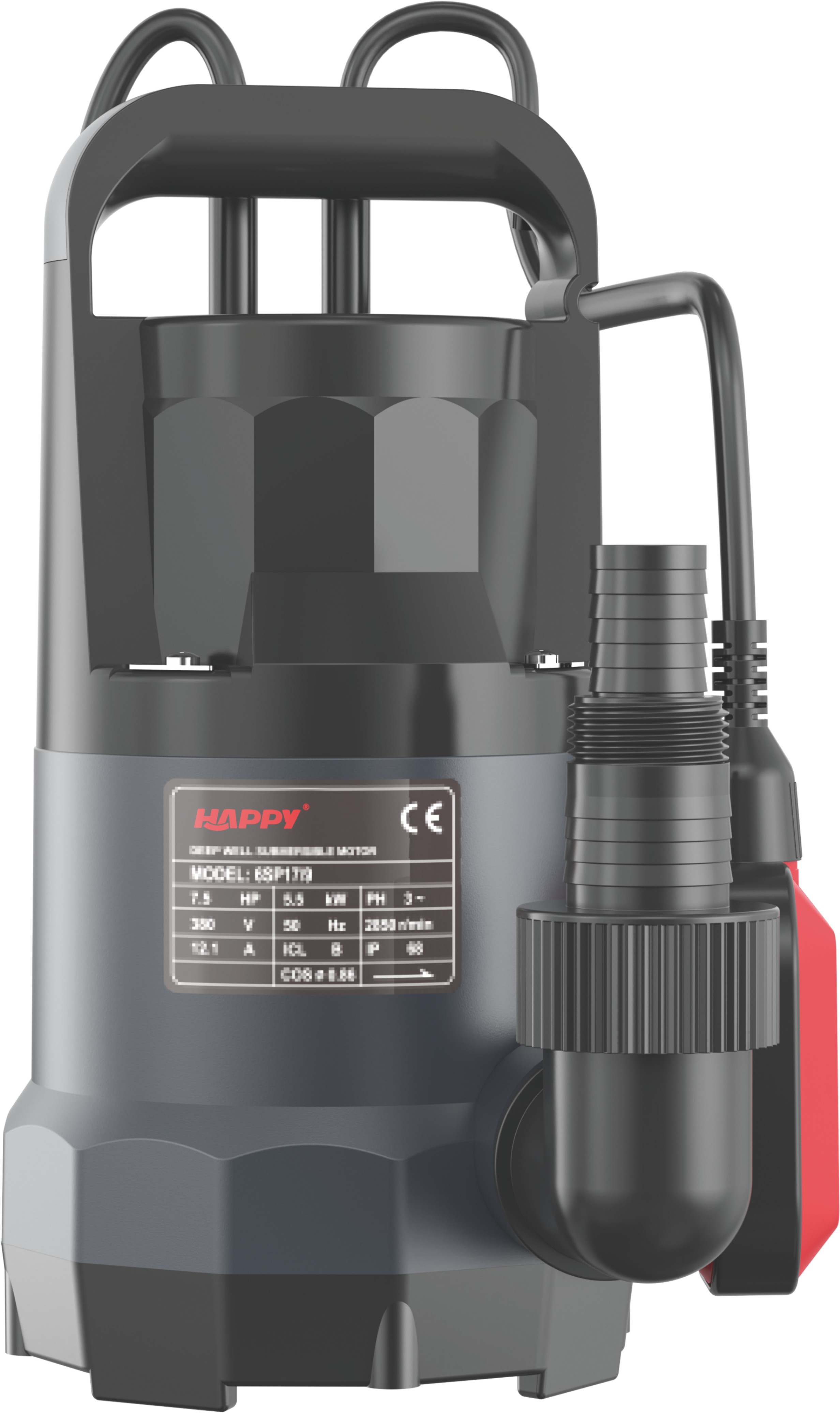
The QDP series is one of the pump designations that should appear identically on the quotation, the nameplate and the packing list.
Layer 2 — Motor housing material and efficiency designation
Motor verification has three variables that buyers frequently collapse into one. The first is the housing material: cast iron or aluminum. The second is the type designation: IE2, IE3, IE4 or MS, and other classes as applicable. The third is the frame and rating, expressed through designations such as 90S-6 and 90L-6, with a power range of 1–430 HP and speeds of 934–2,980 rpm. A quotation that states only “three-phase motor” leaves all three variables open, and all three change the product.
Layer 3 — Series and model designations
Model designations are the anchor of batch consistency. The published pump designations in this category include HQBm, QB60, IDB35, HPSm-AX, HRSm-A, QDP series and QDX series, alongside subcategories such as deep well pumps, sewage pumps, solar pumps, multistage pumps and swimming pool pumps. When a buyer orders by designation rather than by description, three checkpoints become possible: the proforma invoice line, the nameplate on the unit, and the packing list on the carton. If those three never agree, the buyer has no way to prove what was shipped.
Layer 4 — Operating envelope and protection class
The declared operating envelope is the boundary inside which a model is offered: power from 0.25 kW to 550 kW, heads of 20–100 m, flows of 1.5–5,500 m³/h and protection ratings from IP44 to IP68. Working conditions include clean water, sewage or particle-containing water, high-head pumping and submersible installation, and operation can be continuous or intermittent and cyclic. Installation may be submersible or surface-mounted depending on the model. Protection class deserves separate confirmation because IP44 and IP68 units are both sold within the same catalogue, and a wet-installed application cannot absorb the wrong rating.
Layer 5 — Batch control, testing and after-sales terms
Production evidence closes the loop. Ask for the quality-control regime in numbers — a factory operating at 100% test on its lines is stating something checkable. Ask for the monthly capacity that will be reserved for your programme, and for the lead time that goes with it: in this category, a monthly capacity of around 400,000 units and a lead time of 30–45 days are the reference points that a buyer should compare against their own delivery commitments. Minimum order quantities are typically structured by power band, at 100 pcs below 3 HP and 50 pcs above 3 HP. Finally, fix the after-sales position: a one-year warranty with remote support, against a normal service life measured in years rather than months in typical applications.
ZHEJIANG HAPPY PUMP INDUSTRY CO.,LTD, a pump and motor manufacturer established in 1990 and located in Daxi Town, Wenling City, Zhejiang Province, publishes all five layers across a product range described as 11 major series and more than 500 specifications, produced on a site of about 55,000 m² with roughly 210,000 m² of building area and approximately 800 employees, of whom about 200 are professional and technical staff. Its R&D function uses CFD, FEA and motor electromagnetic design tools — and the same discipline applies to any supplier: the claims matter less than the documents attached to the specific model you order.
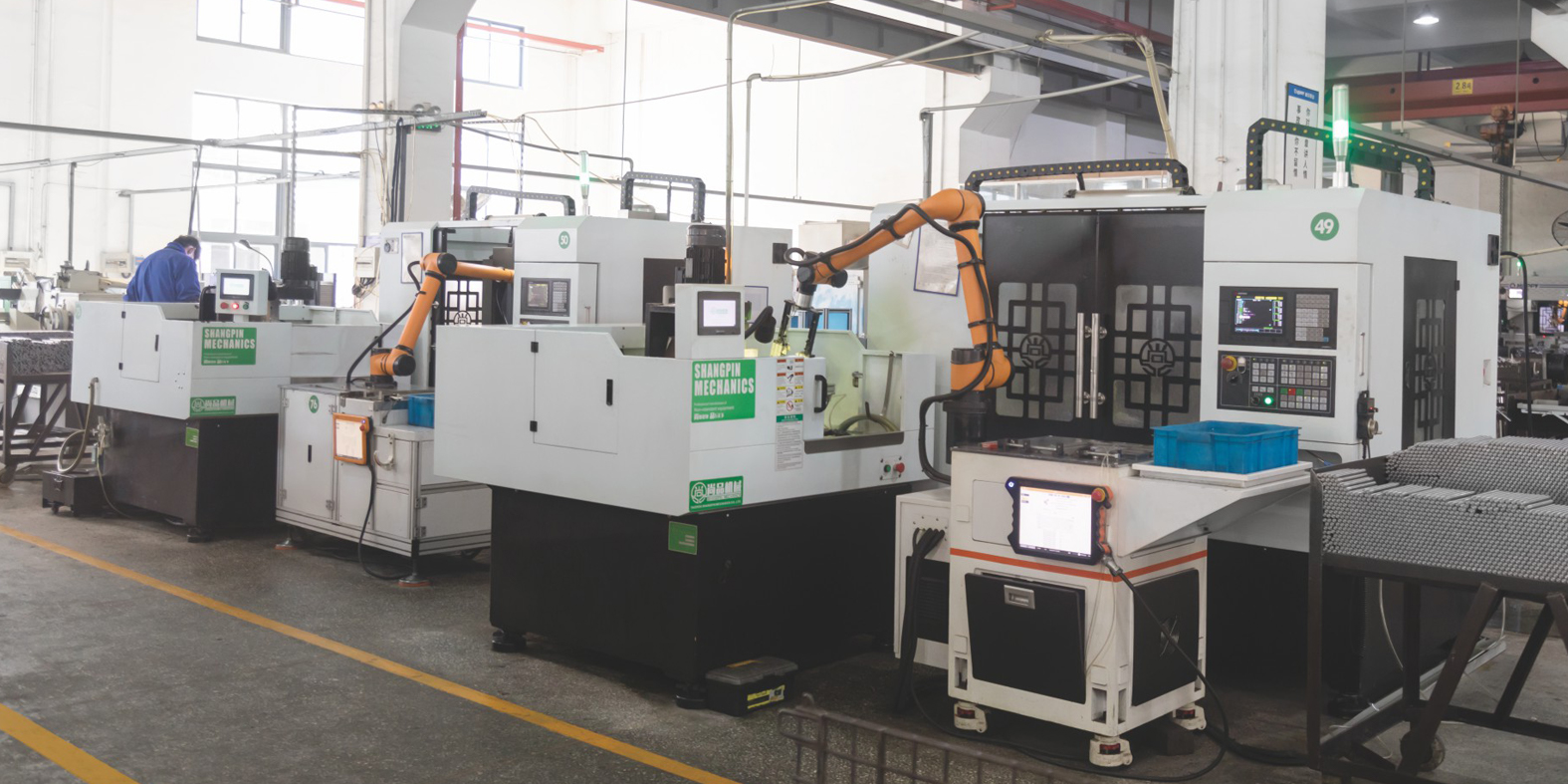
In-house motor, coil and pump production supports a manufacturer claim, but component documents remain the verification tool for a specific order.
The eight-step verification checklist
The sequence below is designed for the evaluation stage, before any deposit is transferred. Each step produces a document that can be filed against the project.
- Write a component-level specification, not a product name. Replace “submersible pump” with the series designation (for example QDX series or QDP series), the duty point, and the material for each major component. Everything downstream depends on this step.
- Request a material declaration per component. Pump side: cast iron, stainless steel or engineering plastics, named per part. Motor side: cast iron or aluminum housing, named per model.
- Confirm the motor designation. Ask for the efficiency class (IE2, IE3, IE4, MS, as applicable), the frame designation such as 90S-6 or 90L-6, the power within the 1–430 HP range and the speed within 934–2,980 rpm.
- Confirm the pump series against the application. Deep well and borehole duty, sewage and particle-containing duty, household supply duty and solar-driven duty are matched to different designations within the same catalogue — so the designation must be selected deliberately.
- Verify the rated envelope. Check power (0.25–550 kW), head (20–100 m), flow (1.5–5,500 m³/h) and protection class (IP44 to IP68) for the exact ordered model, not for the family.
- Fix the accessory list. Motors, pressure tanks or pressure control units, controllers, junction boxes and filters must be listed with the same model discipline as the pump itself, because the unit must be used with its matching equipment for correct operation.
- Confirm batch control and testing. Ask how the released batch will be identified, what the test coverage is (100% test is the stated regime in this category), and request a nameplate photograph and packing list for each shipment.
- Confirm commercial and service terms. Minimum order quantity by power band (100 pcs below 3 HP, 50 pcs above 3 HP), lead time (30–45 days), warranty period and the scope of remote after-sales support.
- Component-level material declaration (pump and motor)
- Motor efficiency class and frame designation in writing
- Series designation confirmed on quotation, invoice and nameplate
- Duty point and protection class for the exact model
- Accessory list with matching models
- Test regime, warranty period and after-sales scope
Verification priorities by project scenario
Not every project needs the same depth of verification. The following scenarios show where the emphasis should fall.
Borehole and deep well irrigation
Borewell duty was the largest application segment in the global submersible pump market at 46.7% share in 2025, according to Grand View Research, which makes it the most competitive and the most frequently specified scenario. The verification priorities here are the deep well designation, the head and flow at the duty point, and the motor class, because a borehole installation is expensive to pull and re-install. High-head agricultural irrigation and borehole pumping projects also require the corrosion-resistant material decision to be made explicitly rather than assumed.
Household and domestic water supply
Domestic supply is where the electrical detail matters most. Single-phase household pumps fall under IEC 60335-2-41 for voltages up to 250 V, so the buyer should confirm that the ordered configuration matches the standard reference the supplier claims. Quiet running and stable operation are the practical requirements in domestic use, and the material declaration should be read against the local water chemistry rather than against a generic “clean water” description.
Sewage and particle-laden drainage
Sewage and particle-containing water is a different duty class. Working conditions in this category explicitly include sewage and particle-containing water, and the published special requirements include corrosion-resistant or stainless materials. Verification should therefore cover the wetted-material declaration, the protection class of the submersible configuration, and the accessory list, since drainage duty frequently fails at the control and junction hardware rather than at the pump.
Solar off-grid water supply
Solar pairing is spreading quickly in water-scarce agricultural regions; submersible pumps with solar pairing are increasingly adopted in South Asia, where a very high proportion of freshwater withdrawal is used for agriculture, according to Precedence Research. Solar-driven systems are typically operated with controllers and parallel configurations, so verification has to include solar power compatibility, the controller list and the special input and output voltage and frequency confirmation. These are customisation items, not catalogue defaults.
Municipal drainage and industrial circulation
At the upper end of the range, water delivery and boosting duties in municipal and industrial circulation require flow rates up to 5,500 m³/h, which in practice means large-frame motors and a documented accessory chain. For these projects the buyer should verify the motor range limit is genuinely available (up to 430 HP within the published motor series), and confirm lead time against the 30–45 day reference rather than against a verbal promise.
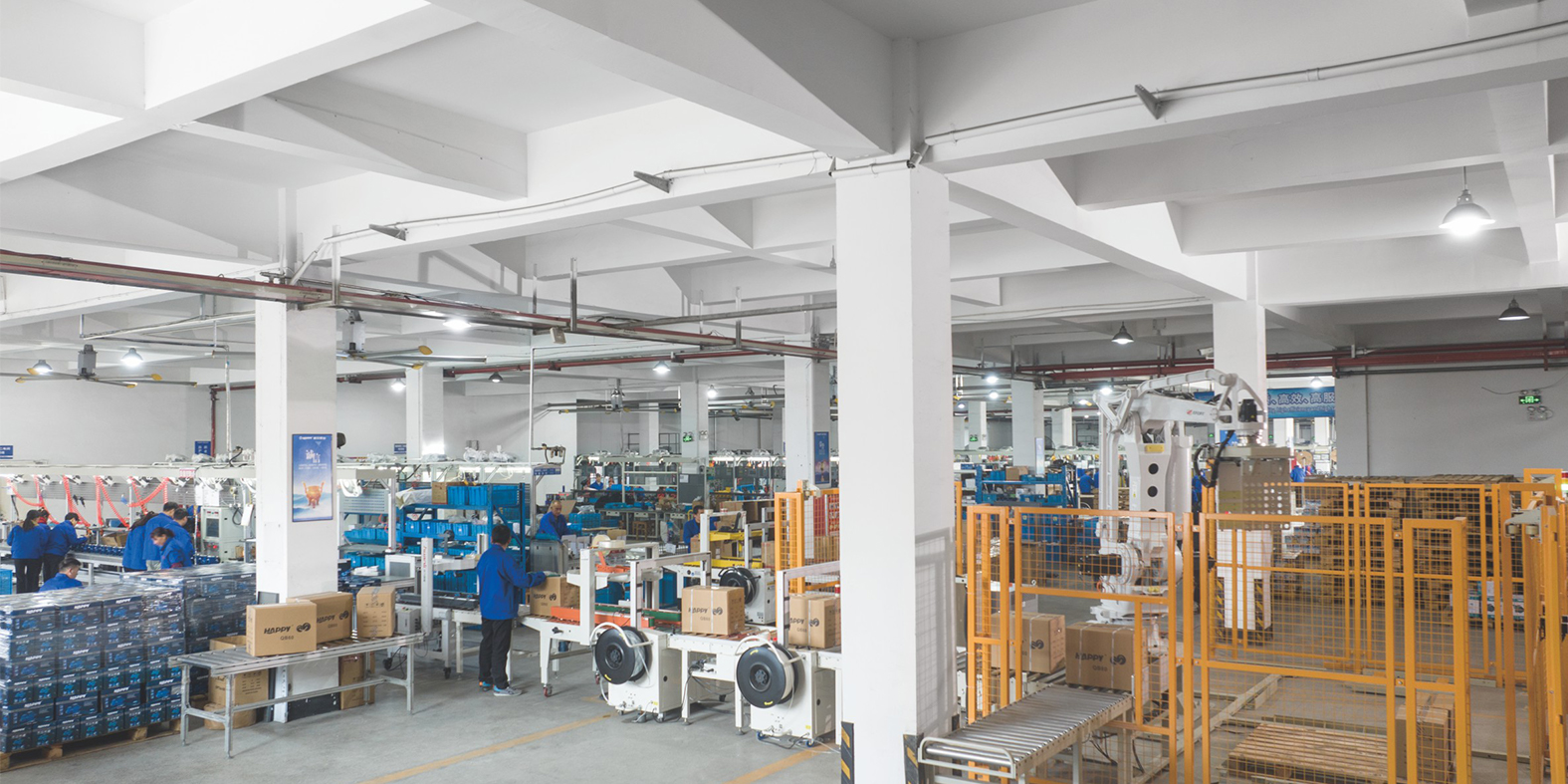
Batch identification at packing is the last point at which a model mismatch can be caught before the container is sealed.
Component-level verification matrix
The table below summarises what to request for each checkpoint and what the request protects against. Every entry is drawn from published product and capability data for this category, and each one is verifiable against a document.
| Verification checkpoint | Evidence to request | What it protects against |
|---|---|---|
| Pump body and wetted parts | Component-level material declaration: cast iron, stainless steel or engineering plastics | Material substitution between sample and production batch |
| Motor housing material | Written statement of cast iron or aluminum for the quoted motor | Ambiguous lines where either material could legitimately be delivered |
| Motor efficiency class | IE2, IE3, IE4 or MS designation per line item | Class drift between quotation, nameplate and delivery |
| Motor frame and rating | Frame designation (e.g. 90S-6, 90L-6), power 1–430 HP, speed 934–2,980 rpm | Motor incompatible with the pump or with the local supply |
| Pump series designation | Exact series: HQBm, QB60, IDB35, HPSm-AX, HRSm-A, QDP series, QDX series | Substitution between series within the same product family |
| Duty point | Power 0.25–550 kW, head 20–100 m, flow 1.5–5,500 m³/h for the ordered model | A unit inside the family but outside the project requirement |
| Protection class | IP44 to IP68 rating of the specific configuration | Under-rated units installed in wet or submersible conditions |
| Test and batch records | 100% test confirmation, nameplate photograph, packing list per batch | Mixed batches and unlabelled cartons in one container |
| Matching equipment | Motors, pressure tanks or pressure control units, controllers, junction boxes, filters | Missing accessories that prevent correct operation |
| Commercial and service terms | MOQ by power band (100 pcs below 3 HP, 50 pcs above 3 HP), lead time 30–45 days, 1-year warranty, remote support | Unplanned delays and unclear responsibility after installation |
Frequently asked questions
What compliance documents should I request from a submersible pump supplier?
Ask for the safety standard reference and the certificate that covers the exact model you are buying. IEC 60335-2-41:2024 establishes safety requirements for electric submersible pumps for household and agricultural use, and covers single-phase household pumps for voltages up to 250 V. For the North American market, UL 778 is the primary safety standard for motor-operated water pumps. The practical step is to check that the model designation listed on the certificate matches the designation on your purchase order, since a certificate for a different series does not cover the unit you are shipping.
How do I evaluate a deep well submersible pump manufacturer for borehole irrigation projects?
Verify four things in writing. First, that the manufacturer builds the relevant designations — for pump ranges in this category these include QDX series, QDP series, HQBm, HPSm-AX and HRSm-A. Second, that the rated envelope covers the duty point, with power from 0.25 kW to 550 kW, heads of 20–100 m and flows of 1.5–5,500 m³/h. Third, that the unit can be configured for high-head agricultural irrigation and borehole pumping, including the material decision for corrosion resistance and the protection class up to IP68. Fourth, that the matching equipment — motors, pressure tanks or pressure control units, controllers, junction boxes and filters — is quoted with the same model discipline as the pump, because the unit has to operate with its matching equipment.
What minimum order quantity and lead time should I plan for?
Plan around the banded structure that applies in this category: minimum order quantity of 100 pcs below 3 HP and 50 pcs above 3 HP, with a lead time of 30–45 days. Against those figures, the production capacity behind an order is typically around 400,000 units per month. Confirm both numbers before you commit to a delivery date with your own customers, and remember that customisation requests such as voltage, logo, or special input and output voltage and frequency add a specification step before production starts.
Can I validate a sample before releasing a batch order?
Sample validation is the cheapest point at which a mismatch can be found, and it only works if the sample arrives with documentation. Request the component-level material declaration, the motor efficiency class and frame designation, and the series name exactly as it will appear on production units. Then check the physical sample against those documents: nameplate designation, housing material, protection class and the accessory set. A sample without documents only proves that the factory can build something, not that it will build the specification you wrote.
How do I keep a repeat order consistent with the first batch?
Treat the approved specification as an annex to every purchase order, and keep the approved sample on file as the reference unit. For each shipment, request a nameplate photograph and the packing list so the released batch can be identified per model before the container is sealed. Fix the service terms in the same document: the stated regime in this category is a one-year warranty with remote after-sales support, against a normal service life measured in years in typical applications, with stable operation and low noise as the performance expectations. If your programme is large enough to warrant it, ask for a factory visit or a live production-line walkthrough before placing the repeat order — the supporting evidence for an order can be sent to admin@happypump.com and reviewed against your specification sheet.
Conclusion: verification is a document set, not a conversation
A submersible pump supplier evaluation succeeds or fails on three written facts: the material of each major component, the motor designation including its efficiency class and frame, and the series name that will appear on the nameplate and the packing list. When those three are fixed before production, mismatched batches become a documentary exception rather than a container-level surprise. When they are left open, the buyer carries the risk of the gap between a category name and a delivered unit.
The checklist in this article is deliberately narrow. It does not tell you which pump to buy; it tells you how to prove that the pump you agreed to buy is the pump that arrives, whether the order is a first sample, a trial batch or a repeat programme.
Next step: send your specification for verification
If you are evaluating submersible pump suppliers for a borehole, household, sewage, solar or municipal project, send the duty point, the required material and the motor class you need. ZHEJIANG HAPPY PUMP INDUSTRY CO.,LTD can confirm which designation fits — QDX series, QDP series, HQBm, HPSm-AX, HRSm-A, QB60 or IDB35 — and return the corresponding material and motor documentation for your file.
Website: www.happypump.com | Email: admin@happypump.com | Tel: +86-576-86331608 | WhatsApp: +86-13758679190
Address: Dayangcheng Industrial Zone, Daxi, Wenling, Zhejiang / No.318, West Xingpan Road, Daxi, Wenling, Zhejiang
Product catalogue and full specification range: download the Happy Pump catalogue.
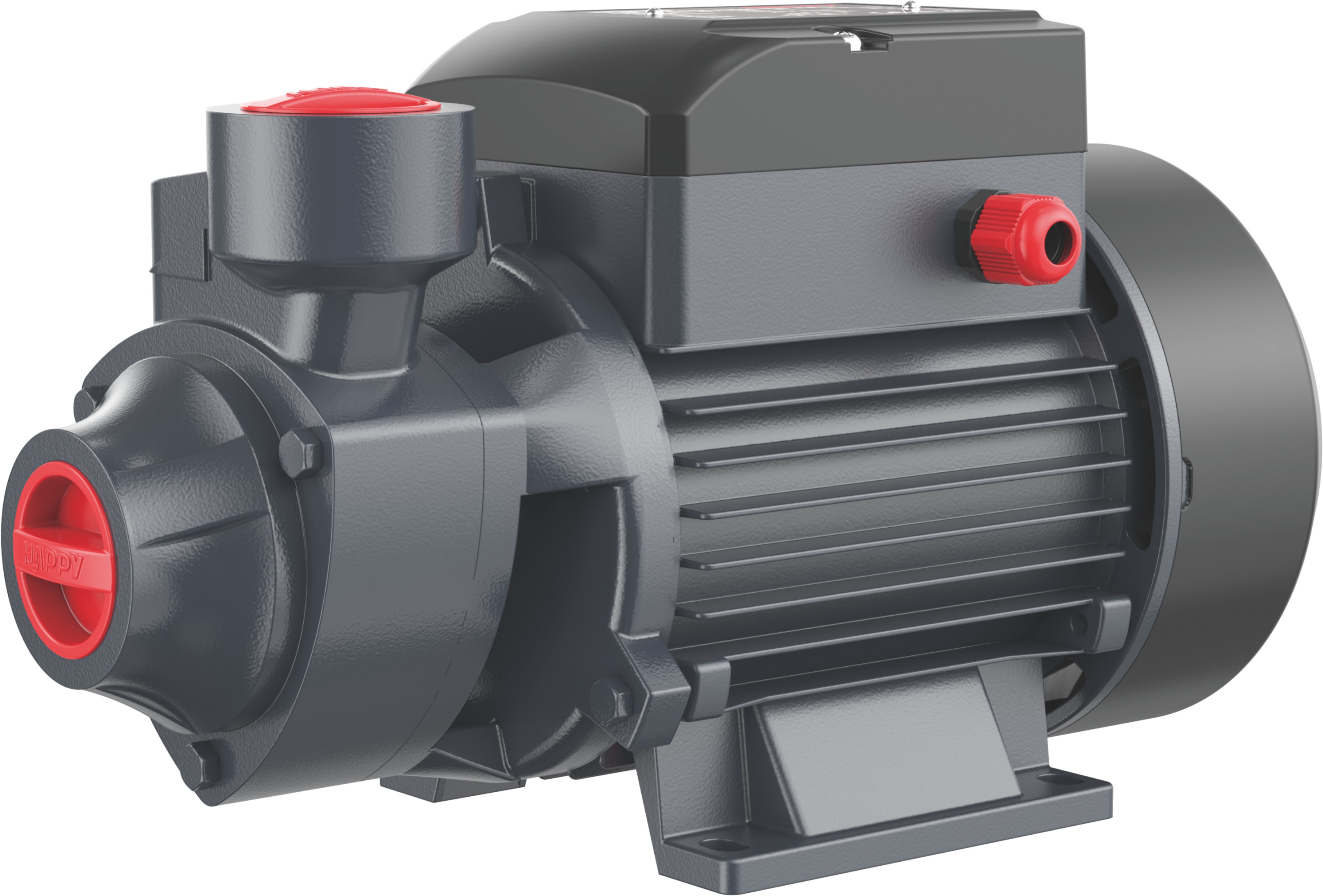
Sample and documentation requests should reference a specific designation — for example QB60 — rather than a general product category.
Have Questions or Need More Details?
Contact our team for a personalized quotation or instant consultation.
Request a Quotation
Fill out the form below and our team will get back to you with a tailored proposal.
WhatsApp Direct Chat
Prefer to chat in real-time? Message us on WhatsApp for instant assistance & quick answers.
- Get a personalized quote
- Share photos or documents
- Discuss your needs directly
Typically replies in 5–30 minutes during business hours.