
Long-Term Submersible Pump Partnership: Terms, Acceptance and After-Sales FAQ
A long-term submersible pump supply relationship is decided less by the first quotation than by the four documents that repeat with every shipment: the frozen specification, the acceptance clause, the compliance file and the commercial terms. This FAQ answers the questions buyers raise at the point of committing to repeat supply — purchasing terms, acceptance criteria and after-sales support — using the published positions of Zhejiang Happy Pump Industry Co., Ltd. as the reference case, and it separates what a supplier publishes from what the buyer must still write into the contract.
Zhejiang Happy Pump Industry Co., Ltd. is a Chinese pump manufacturer established in 1990 in Daxi Town, Wenling City, Zhejiang Province, operating roughly 55,000 m² of site area and about 210,000 m² of building area. Its main product series are surface pumps, submersible pumps, deep well pumps, solar pumps, motors, pressure control tanks and spare parts. Products are exported to more than 150 countries and regions, and export business accounts for 99% of total sales.

A repeat supply programme is supported by the production site behind it, not only by the quotation sheet.
Why long-term submersible pump agreements fail on paperwork rather than hardware
In repeat supply programmes, disputes rarely begin with a failed motor. They begin with four documentation gaps. The specification used for the first order was never frozen, so every reorder re-opens the discussion on head, flow, protection level and material. Quality was agreed verbally, so acceptance becomes a matter of opinion when the second container is inspected. The MOQ threshold was priced per item rather than per power band, so a mixed order produces an unexpected quantity commitment. And the compliance documents were requested after the vessel was booked, when nothing can be corrected in time.
For a buyer at decision-to-execution stage — supplier shortlisted, first framework order being structured — the practical exercise is to separate published terms from clauses you must draft. Published terms cover the minimum order quantity bands, delivery terms, the payment split and the acceptance method. The buyer still has to write the model-level specification, the test criteria, the document list, the delivery schedule and the after-sales commitments. Confusing the two is the most common reason a partnership starts smoothly and then stalls.
The published purchasing terms, and what each one actually decides
The commercial framework is short enough to state completely, which is an advantage in itself: a term that fits on one line is a term that can be repeated on every purchase order without reinterpretation.
| Term | Stated position | What it decides for a repeat order |
|---|---|---|
| Minimum order quantity, pumps below 3HP | 200 pieces | Sets the floor for low-power models such as household, domestic and garden duty units. Mixed low-power orders are where MOQ friction appears. |
| Minimum order quantity, pumps above 3HP | 50 pieces | Allows smaller trial quantities on higher-power deep well and irrigation models. |
| Delivery terms | FOB / CIF | Decides who contracts freight and insurance and where risk transfers. The loading port, named destination and Incoterms edition should be written into the agreement. |
| Payment terms | 30 / 70 | A two-instalment split. The contract must name the event that releases each instalment. |
| Acceptance criteria | Pre-shipment test | Makes factory testing the acceptance event, before goods leave the plant. |
Commercial positions as published; the right-hand column is buyer-side drafting, not supplier policy.
The two-tier MOQ is the most useful published term for planning a first framework order, because it follows motor size rather than product family. A programme that mixes 1.0HP domestic units with larger agricultural deep well units should be structured so that low-power models consolidate into one 200-piece release, while higher-power lines can run at 50 pieces per release. Whether a specific model sits below or above 3HP must be confirmed on its rating plate and datasheet rather than inferred from the series name.
FOB and CIF are offered as alternatives, which means the buyer chooses how responsibility is split. Under FOB the buyer normally arranges the main carriage and insurance; under CIF the seller arranges carriage and insurance to the named destination port. What matters across a season is consistency: switching between the two between releases changes the landed-cost comparison and the point at which risk passes, and quietly invalidates last quarter's cost model. The named port and the applicable Incoterms edition belong in the framework document, not on a quotation that will be superseded.
The 30/70 split raises one question worth more than the ratio itself: what releases the balance. Whether it is a pre-shipment inspection report, a bill of lading or arrival at destination determines how much leverage the buyer keeps after production. Writing that trigger down removes the most frequent cause of delay on the second and third shipments.
Acceptance criteria: why the pre-shipment test is the backbone of the agreement
Products are accepted through pre-shipment test procedures, and the acceptance inspection includes that pre-shipment test. In a long-term relationship this single clause carries more weight than any other, because it fixes the moment at which the buyer's specification and the supplier's output are compared — at the factory, while corrective action is still inexpensive and the container has not moved.
A pre-shipment test is only as strong as the criteria attached to it. The clause says when acceptance happens; it does not by itself say what is measured. For it to be usable on every release, the agreement should attach a test sheet naming the model code and series, rated power and voltage, frequency and phase, the duty point at which the unit is checked, the declared protection level and construction material, and the record issued with each shipment. Without that sheet, acceptance defaults to the supplier's internal standard, which is a different commercial arrangement from the one the buyer believes was agreed.
| Acceptance file item | Why it decides acceptance | What to attach |
|---|---|---|
| Model code and series | A series name such as QDP or QDX does not fix a duty point; the model code does | Datasheet page showing model, rated power, voltage, frequency and phase |
| Construction material | Cast iron, stainless steel and engineering plastics suit different media; a substitution changes the product | A material statement per model in the specification |
| Protection level | The water-ingress rating must match how the pump is installed and how deeply it is immersed | The declared IP rating (within the IP44 to IP68 range) and the conditions under which it is declared |
| Motor efficiency class | Changes both running cost and the compliance file | The efficiency class per motor, referenced to IEC 60034-30-1, whose 2025 second edition introduced class IE5 |
| Pre-shipment test criteria | Defines pass or fail before shipment | A signed test sheet naming the measured parameters |
| Compliance documents | Needed for customs and market entry, often long after the order | Certificate copies with number, issuing body, validity and covered models |
| Packing and marking | Determines condition on arrival and whether cartons can be received into your warehouse | Packing specification and shipping marks per release |
A pre-shipment acceptance clause is only repeatable when the criteria behind it are written down.
Boundary to keep in view: the pre-shipment test is a factory acceptance check. It is not a field performance guarantee, and it is not third-party witnessed verification unless the contract states that a named inspector attends. Both points should be explicit before the first release.
Freezing the specification: pump line, series, IP rating and material
The product scope available for a framework agreement spans submersible pumps, sewage pumps, deep well pumps and solar pumps, with series including QDP and QDX, protection levels from IP44 to IP68, and cast iron, stainless steel and engineering-plastic construction. That breadth helps a buyer consolidate several duties with one supplier, but it also creates the main acceptance risk: a programme covering several lines needs a specification per line, not one generic specification for a submersible pump.
Deep well and borehole duty is served by deep well submersible pumps, with solar submersible pumps where a site has no dependable grid supply. For acceptance purposes the specification should state borehole diameter, required head and flow, and the power available at site, because those inputs decide the model and the motor. Sewage and drainage duty calls for sewage submersible pumps, including cutting sewage designs where solids must be reduced before transfer; the specification should state the medium and the solids handling requirement. Clean-water and domestic duty — household submersible pumps, garden duty, 1.0HP class units — usually falls inside the below-3HP MOQ band and benefits from consolidation.
Material selection should be decided per model and recorded. Cast iron is common where general water duty, weight and cost dominate; stainless steel is chosen where corrosion resistance or water quality is the deciding factor; engineering plastics serve lighter domestic and garden duties where weight and chemical resistance matter. Protection level follows the installation: a pump that is only splashed and one that is continuously immersed do not need the same rating, and where IP68 is declared the conditions behind that declaration should appear in the specification rather than be assumed.

Automated production equipment is one of the stated control measures behind repeat-order consistency.
Compliance documents: what is claimed and what still has to be verified
The company reports ISO 9001:2015, ISO 14001:2015, ISO 45001:2018, EU CE, CB, RoHS and TUV-related test certification. These are company-reported claims: the published statements do not establish certificate numbers, issuing bodies, validity dates or the specific models each certificate covers. A repeat-order file should therefore hold copies rather than references, and should be reviewed before each expiry rather than at the point of shipment.
Two standards questions recur in submersible pump procurement. The first is product safety: IEC 60335-2-41 covers electric pumps for household and similar purposes, and submersible pumps fall within its scope; the edition commonly cited is the 2012 edition, while the IEC publication page notes that a newer 2024 version exists, so the applicable edition for your target market should be confirmed before the file is closed. The second is motor efficiency: IEC 60034-30-1 defines the IE efficiency classes, and its 2025 second edition introduced IE5. Expressing efficiency as a class rather than as a fixed percentage keeps the clause verifiable if the standard is revised during a multi-year agreement.
Classification matters too, because duty and document requirements are set at tariff-line level. Submersible pumps are generally centrifugal pumps, and HS 841370 covers centrifugal pumps not elsewhere classified under heading 8413 — a heading broader than submersible pumps, so the national line should be confirmed with a customs broker rather than derived from the heading alone. For context on documentation intensity, China's exports of parts of pumps for liquids under HS 8413.91 were valued at USD 3.29 billion in 2024, according to the Observatory of Economic Complexity.
How the supplier's risk controls support a multi-year schedule
Zhejiang Happy Pump Industry Co., Ltd. states that it addresses supply chain volatility, certification and compliance, lead-time and logistics, and overseas market credit and payment risk. The stated control measures are automated production equipment, vacuum coil dipping, automated assembly and high-precision testing systems, supported by management-system controls, automated inspection equipment, incoming and finished-product inspection, and laboratory and performance testing.
Each measure maps onto a clause the buyer can write. Supply-chain volatility maps onto a rolling schedule and safety stock for fast-moving models. Certification and compliance map onto a document pack released with each shipment. Lead-time and logistics map onto the choice between FOB and CIF and onto buffer time agreed before the season rather than after it. Credit and payment risk map onto the 30/70 trigger. The supporting scale is also on record: annual production capacity of approximately 4,000,000 pieces, around 800 employees including about 200 professional and technical staff, an enterprise research institute and high-tech R&D centre using CFD, FEA and motor electromagnetic design tools, and exports at 99% of sales.
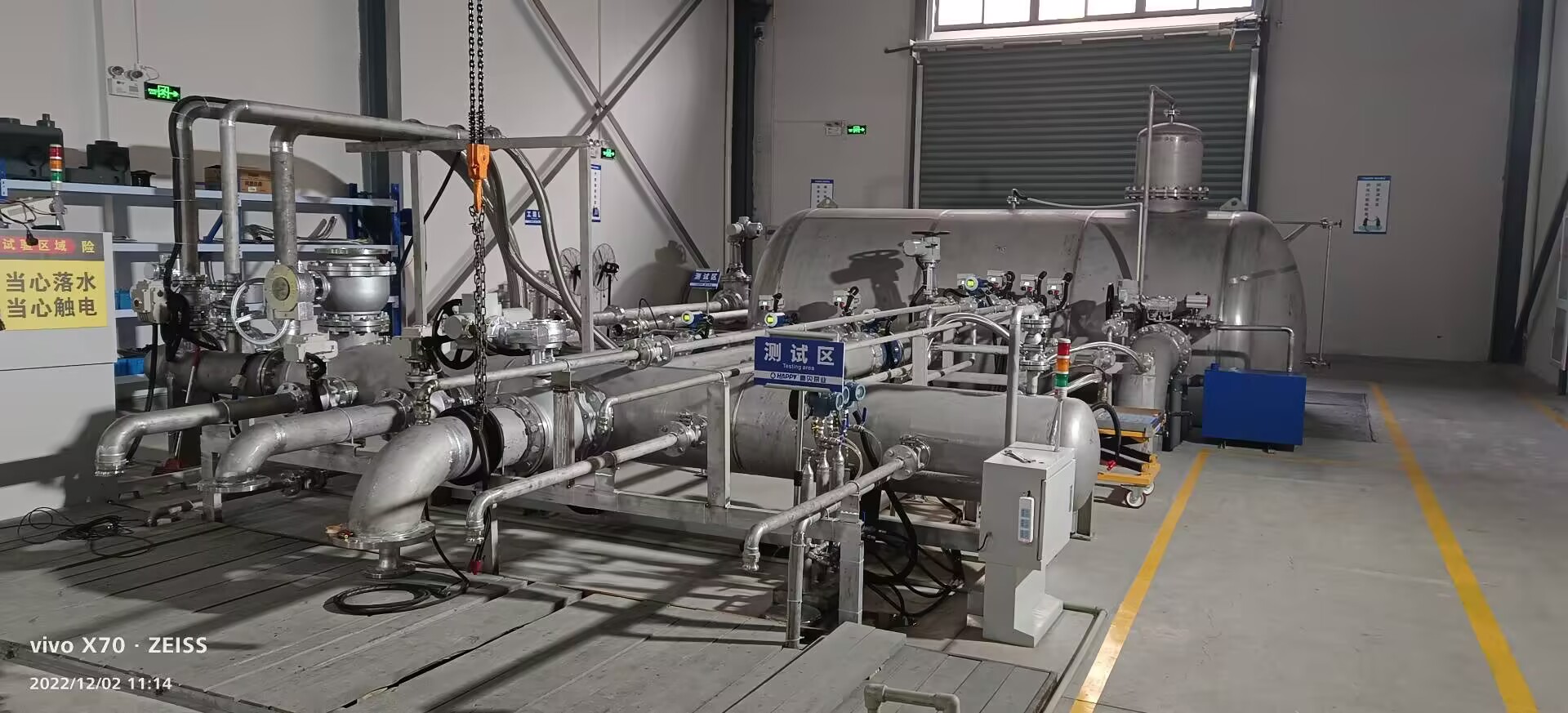
Performance testing supports the pre-shipment acceptance clause, which is the backbone of a long-term agreement.
Seven steps from a first order to a repeatable supply programme
- Freeze the specification per line. Write one specification page for each pump line in the programme, naming model code, rated power, voltage, frequency, phase, protection level and material. A single generic page covering several lines is the shortest route to specification drift.
- Attach the test sheet to the acceptance clause. State the duty point, the parameters measured and the record issued. This converts pre-shipment testing from a phrase into a pass or fail decision.
- Assemble the compliance file before the first shipment. Collect certificate copies with numbers, issuing bodies, validity and model coverage, plus the confirmed tariff line for each destination.
- Fix the commercial frame once. Record the MOQ bands, whether FOB or CIF applies, the named port, and the event that releases the 70% balance. Do not renegotiate these on each call-off.
- Define the release mechanism. A framework agreement plus dated call-offs lets the second, fifth and tenth orders reference the same frozen specification instead of circulating a new enquiry.
- Name the escalation path. One named contact shortens the cycle when a test result, a document or a schedule needs a decision; the published contact is Henry Guan, reachable on +86-13758679190 via mobile, WeChat or WhatsApp, with email at admin@happypump.com and telephone +86-576-86331608.
- Review the file annually. Recheck certificate validity, standard editions and the specification against what is actually being installed on site. This is the step that keeps a multi-year agreement current.
Use case: a deep well submersible pump programme for agricultural irrigation
An irrigation programme is the classic repeat-order case, because the same model is purchased season after season across sites with different boreholes. Structuring it from the published terms is straightforward: deep well submersible pumps form the core line, solar submersible pumps cover sites without dependable grid power, units above 3HP can be released at 50 pieces, and low-power units consolidate into 200-piece releases. Per-site specification should record borehole diameter, water level, required head and flow, the available power supply and the irrigation method; phase and frequency must be stated rather than assumed.
Acceptance should run through the pre-shipment test against those per-site parameters, with the test sheet attached to each release. Delivery should hold one delivery term and one loading port across the season, because changing terms mid-season invalidates cost comparisons and complicates the documents. The real risk in irrigation programmes is timing: demand compresses into a short window, so the rolling schedule and any buffer stock should be agreed before the season opens, not ordered inside it.
Spot purchase versus documented supply programme
| Dimension | Single spot purchase | Documented long-term programme |
|---|---|---|
| Acceptance basis | Supplier's standard inspection | Pre-shipment test against a signed test sheet |
| MOQ treatment | Each order stands alone; below-3HP models need 200 pieces | Call-off releases planned against the 200-piece and 50-piece bands |
| Specification | Re-stated in every enquiry | Frozen per model line and referenced, not retyped |
| Compliance file | Assembled when requested | Held with numbers, validity and model coverage, refreshed on expiry |
| Delivery | Term chosen per shipment | One delivery term and loading port held across the season |
| Payment | Negotiated per order | 30/70 with the releasing event defined |
| Typical failure mode | Re-negotiation and specification drift | Stale documents and unverified certificate scope |
This table compares procurement approaches, not suppliers.
What the documented terms do not prove
- Certificate claims name standards and marks, but certificate numbers, issuing bodies, validity and the models covered are not established by the published statements.
- A pre-shipment test confirms the unit against the agreed criteria at the factory; it is not a field performance guarantee or independent third-party certification.
- Annual production capacity of approximately 4,000,000 pieces describes output capability, not a committed lead time for your specific model or your specific release date.
- An IP rating describes ingress protection under declared conditions; it is not a rating of hydraulic performance, and declared IP68 conditions should be recorded.
- Material suitability is decided per model and per medium; confirm the material statement on the datasheet in the file rather than from the series name.
- Standards change: IEC 60335-2-41 is commonly cited in its 2012 edition while IEC notes a newer 2024 version, and IEC 60034-30-1 added IE5 in its 2025 second edition.
- Warranty length, response times and model-level spare-part availability are not part of the commercial terms summarised here. The product range does include motors, pressure control tanks and spare parts, which is the basis for a parts clause — but the clause itself must be negotiated.
Frequently asked questions on terms, acceptance and after-sales
What documentation should accompany a long-term submersible pump order?
A workable file holds the frozen specification per model, the pre-shipment test sheet and its records, certificate copies with number, issuing body, validity and covered models, and the confirmed tariff line for each destination. The company reports ISO 9001:2015, ISO 14001:2015, ISO 45001:2018, EU CE, CB, RoHS and TUV-related test certification, but the supporting certificate details must be obtained rather than assumed from the claim.
What are the acceptance criteria, and when does acceptance happen?
Acceptance uses a pre-shipment test, and the acceptance inspection includes that test, so acceptance occurs at the factory before the goods ship. The criteria behind it — model, rated power, voltage, frequency, phase, duty point, protection level and material — should be attached to the agreement, because the published method defines when acceptance happens, not what is measured.
Which pump types can one agreement cover?
The product scope covers submersible pumps, sewage pumps, deep well pumps and solar pumps, with series including QDP and QDX, protection levels from IP44 to IP68, and cast iron, stainless steel or engineering-plastic construction. Because the range is wide, each line in the agreement needs its own specification page; one generic page for all submersible pumps is where acceptance disputes start.
Can a long-term agreement support an agricultural irrigation programme?
Yes, and the structure follows the published terms. Deep well submersible pumps form the core line and solar submersible pumps cover sites without dependable grid power; units above 3HP can be released at 50 pieces and low-power units consolidate into 200-piece releases. Per-site head, flow, borehole diameter and available power should be recorded, with the pre-shipment test run against those parameters on each release.
What are the MOQ and payment terms?
For pumps below 3HP the minimum order quantity is 200 pieces; for pumps above 3HP it is 50 pieces. Delivery terms are FOB or CIF, and payment terms are 30/70. The ratio is fixed, but the event that releases the balance — inspection report, bill of lading or arrival — should be written into the contract so that leverage after production is clear.
What changes between the first order and the fifth?
In a well-documented programme, very little: the specification is referenced rather than retyped, the test sheet is reused, and the compliance file is only refreshed on expiry. In an undocumented programme, five things are renegotiated each time — model identity, acceptance, documents, delivery term and payment trigger. The difference is paperwork, not product.
How are lead-time and delivery risk handled?
The company states that it addresses lead-time and logistics risk and supply chain volatility, with control measures including standardized control systems, automated production equipment, vacuum coil dipping, automated assembly and high-precision testing systems. Capacity of approximately 4,000,000 pieces per year supports that capability, but it does not by itself fix a delivery date for a specific model, so the release schedule belongs in the agreement.
Who handles after-sales and repeat-order contact?
The published contact is Henry Guan, reachable on +86-13758679190 via mobile, WeChat or WhatsApp, with email at admin@happypump.com and telephone +86-576-86331608; the company address is Dayangcheng Industrial Zone, Daxi, Wenling, Zhejiang. For after-sales, name that contact in the agreement and pair it with the clauses that published terms do not cover — response expectations, the spare-part list per model and who bears return freight.
Conclusion: the contract is the product that repeats
Committing to a long-term submersible pump relationship is a documentation decision before it is a pricing decision. The published terms are short and usable: 200 pieces below 3HP and 50 pieces above it, FOB or CIF, a 30/70 split, and acceptance by pre-shipment test. Everything that makes those terms repeatable — the frozen specification across submersible, sewage, deep well and solar lines, the test sheet, the verified certificate copies, the tariff line and the after-sales commitments — has to be written by the buyer and agreed by the supplier.
Read the relationship in that order and the risks become visible early: certificate scope that nobody verified, capacity mistaken for a lead-time commitment, a protection level chosen by habit rather than by installation, a payment trigger left vague. Each is cheap to fix before the first release and expensive to fix after the third.
Next step: if you are structuring a first framework order, take the specification pages and the test criteria to the supplier before requesting a price. The current product catalogue can be downloaded here: Happy Pump product brochure (PDF). For terms, acceptance questions or a quotation against a written specification, contact Henry Guan on +86-13758679190 (mobile, WeChat or WhatsApp) or at admin@happypump.com.
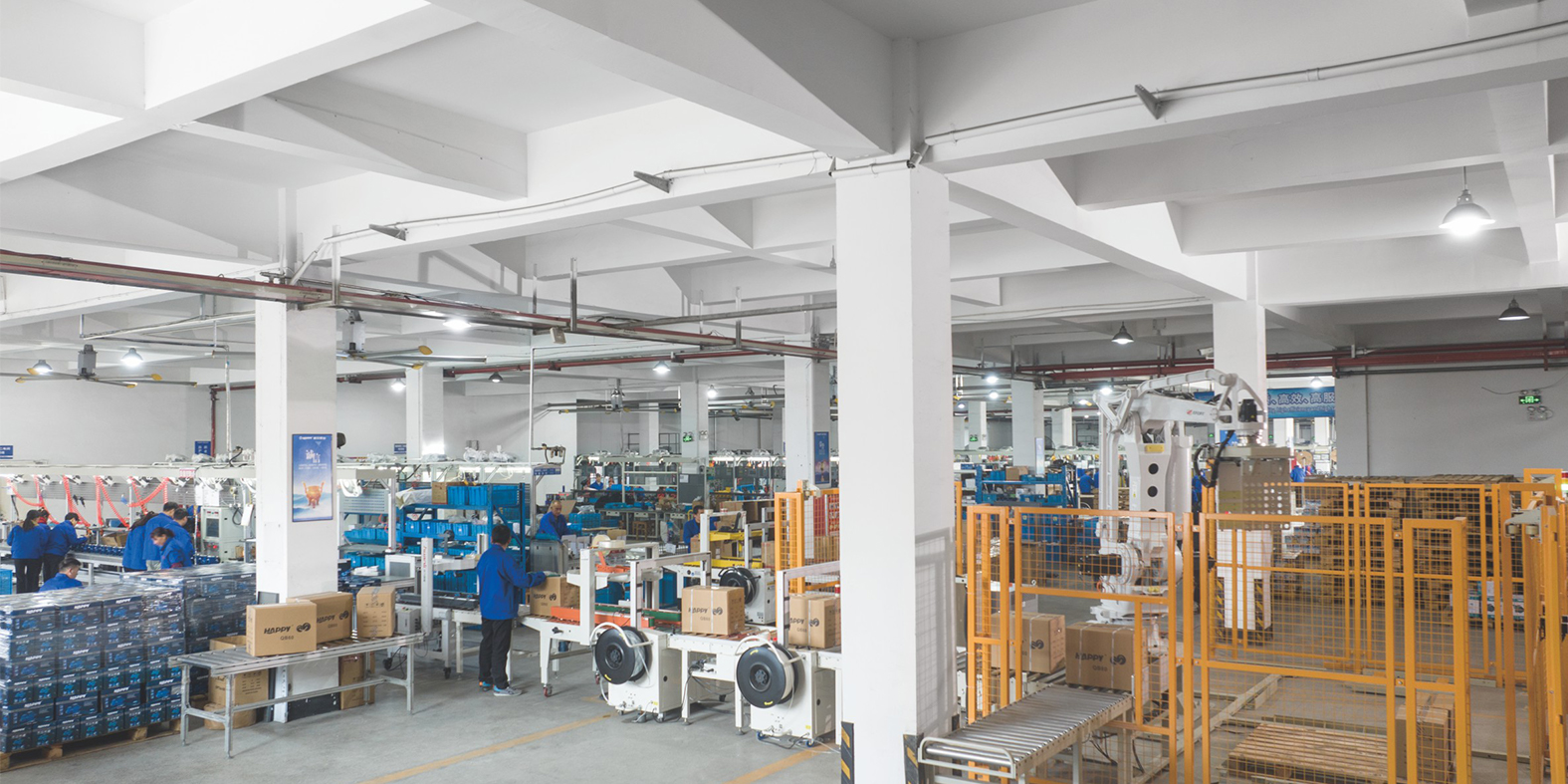
Packing and marking close the acceptance loop: the release is only complete when the carton matches the specification.
Have Questions or Need More Details?
Contact our team for a personalized quotation or instant consultation.
Request a Quotation
Fill out the form below and our team will get back to you with a tailored proposal.
WhatsApp Direct Chat
Prefer to chat in real-time? Message us on WhatsApp for instant assistance & quick answers.
- Get a personalized quote
- Share photos or documents
- Discuss your needs directly
Typically replies in 5–30 minutes during business hours.