
Surface Pump Application Guide: Scenario-to-Spec Matching
A surface pump project rarely fails because the pump is badly made. It fails in the handover between a project description and a model data sheet: the brief says municipal booster duty at 40 m head, the catalogue says head 20–100 m, and nobody converts one into the other. This guide does that conversion for five recurring scenarios — municipal water, industrial circulation and cooling, swimming pool and sewage duty, solar off-grid pumping, and residential and building water supply and drainage.
The short version of the method: read the scenario as four inputs (duty point, water condition, installation environment, documentation file), check those inputs against a single model data sheet, and treat every range printed on a catalogue page as a programme envelope rather than a model rating. The rest of this article is detail on how to apply that rule.
The reference programme comes from Zhejiang Happy Pump Industry Co., Ltd., a pump and motor manufacturer established in 1990 in Daxi Town, Wenling City, Zhejiang Province. Its product range covers surface pumps, submersible pumps, deep well pumps, solar pumps, motors, pressure control tanks and spare parts.
Why scenario matching is a specification problem
A project scenario tells you what the pump must achieve; it does not tell you what to order. Two projects can both be described as building water supply and still need different flow, head, material and protection because the buildings differ in height, occupancy and water treatment. The scenario name is a starting point for selection, not a specification.
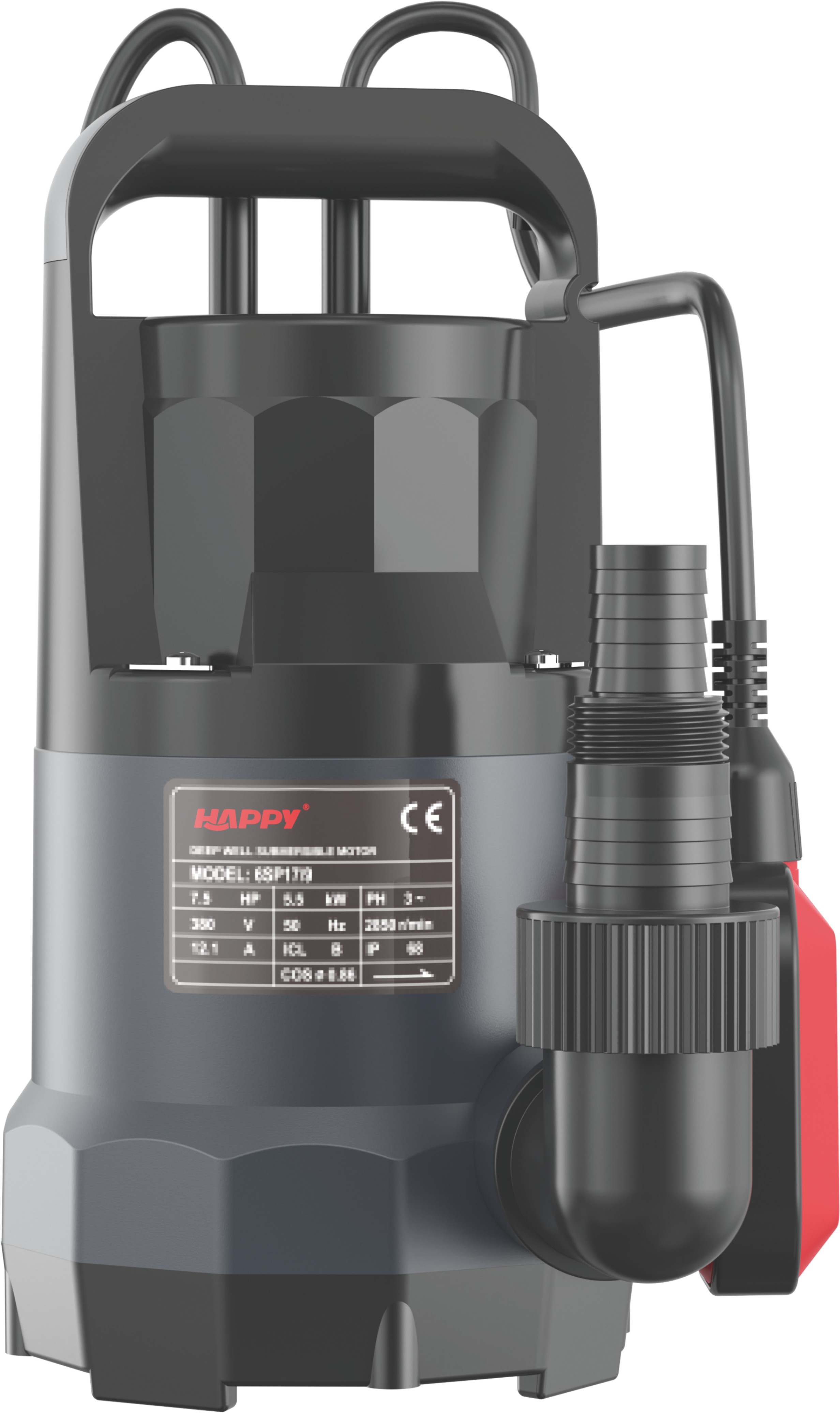
The role assigned to the pump is the first thing to separate. In supply duties the pump delivers water and boosts pressure; in drainage duties its job is to handle sewage and discharge. Those are different requirements on the hydraulic end and on the material, and a model confirmed for one role should not be assumed fit for the other.
The second thing to separate is duty cycle. Documented operating modes for this pump programme include continuous operation and intermittent cyclic operation, with surface or submersible installation depending on the model. A pool that turns its water over continuously and a garden irrigation line that runs twice a week are not the same brief even at identical flow and head.
The specification envelope — and the level at which each figure is true
The programme is documented with a flow range of 1.5–5500 m³/h, a head range of 20–100 m, a power range of 0.25–550 kW, protection classes IP44 and IP68, and main materials of cast iron, stainless steel and engineering plastics. Those figures describe a product programme built from 11 major series and more than 500 specifications. They do not describe one pump.
The distinction has commercial consequences. A buyer who filters a supplier list by flow up to 5500 m³/h will shortlist a company that can build a large unit and a company that builds household units, then compare them as if they were alternatives. A buyer who filters by model that delivers a stated m³/h at a stated m head inside the project's material and protection conditions is doing selection. Only the second filter can be verified against a data sheet.
| Dimension | Documented programme figure | What it decides | Confirm at model level |
|---|---|---|---|
| Flow | 1.5–5500 m³/h | Whether the programme covers the duty at all | Model flow at the project head |
| Head | 20–100 m | Whether the duty sits inside the programme band | Model head at the project flow |
| Power | 0.25–550 kW | Motor size band and supply planning | Rated power of the selected variant |
| Protection | IP44 and IP68 | Sheltered indoor versus submerged installation | Model rating for that installation position |
| Materials | Cast iron, stainless steel, engineering plastics | Corrosion and water-quality compatibility | Grade and wetted parts for the model |
| Motor | IE2, IE3, IE4, MS; 1–430 HP; 934–2980 rpm; frames 90S-6, 90L-6 | Efficiency class and supply matching | Motor fitted to the ordered pump |
| Supporting equipment | Motors, pressure tanks or pressure control units, controllers, junction boxes, filters | System completeness | Which items are included in the offer |
The low end matters as much as the high end. The same programme that reaches 5500 m³/h also starts at 1.5 m³/h and 0.25 kW, which is where domestic and garden duties sit. Scenario matching is therefore not a large-project activity only — the household buyer faces the same translation problem in miniature.
Model families referenced in this guide
The model and series names carried in HAPPY's documentation for this programme include HQBm, QB60, IDB35, HPSm-AX, HRSm-A, the QDP series and the QDX series. They sit inside one pump programme whose subcategories cover surface pumps, submersible pumps, deep well pumps, solar pumps, centrifugal pumps, self-priming pumps, pressure tanks, swimming pool pumps, multistage pumps and sewage pumps.
Because that list spans more than one construction type, a family name alone does not settle an application. The step that settles it is the model data sheet: flow, head, material, protection class, voltage and phase for the exact variant. One family can be stated more precisely from documented information — the QB 50/60/70/80 clean-water pumps are described in the manufacturer's listing as single-phase 220 V vortex pumps, which places QB60 in the small clean-water segment rather than in municipal duty.
Scenario playbooks
Each playbook below converts a scenario into the inputs that must be fixed before a model is quoted. The scenarios come from the programme's documented application set: agricultural irrigation, residential and building water supply and drainage, municipal drainage and water supply, industrial circulation and cooling, solar water pumping, and swimming pool and sewage treatment.
Municipal water supply and drainage
What the pump does: moves water into a network and holds pressure at the draw-off points, or discharges water in drainage duty. What decides the spec: network demand in m³/h at the design head, plus the head needed to overcome the network's own losses. Where buyers go wrong: taking a head value from the catalogue band instead of calculating it, so the unit is oversized at low demand or short at peak demand.
Material follows water chemistry rather than the word municipal. Treated water in a controlled network and aggressive water in an older network are different material decisions. Where the water requires it, the programme documents corrosion-resistant or stainless material as a special requirement to be confirmed at order stage — it is not automatic across the range.
Installation decides protection class. A dry-mounted unit in a plant room and a unit in a wet well are not interchangeable, and the IP44 and IP68 variants exist for that reason. Supporting equipment should be planned with the pump rather than after it: motors, pressure tanks or pressure control units, controllers, junction boxes and filters are all documented as supporting equipment for these applications.
Industrial circulation and cooling
What the pump does: circulates water through a cooling or process loop, continuously or in cycles. What decides the spec: the circulation rate, the loop's pressure drop, and whether the loop runs continuously — continuous duty is the condition under which motor and construction choices matter most. Where buyers go wrong: specifying for the clean-water case while the actual loop carries particles from an open circuit.
Documented working conditions include clean water, sewage or particle-containing water, high-head pumping and submersible conditions, and the documentation adds that these apply depending on the model. For an industrial loop that qualifier is the whole selection question: the particle tolerance of the chosen model must be confirmed in writing rather than inferred from the series name.
Cast iron is the conventional starting point for closed, treated industrial loops, with stainless steel where the water or the process demands corrosion resistance. Both are documented materials in this programme; the grade and internal configuration for a given loop still come from the model data sheet.
Swimming pool circulation and sewage duty
What the pump does: in pool duty it circulates water through filtration and returns it; in sewage duty it discharges water carrying solids. What decides the spec: turnover flow and filter head loss for the pool; solids handling and discharge head for sewage. Where buyers go wrong: treating the two as one purchase because both involve water that is not drinking water.
Pool water is treated water, so material becomes the decisive variable. The programme documents corrosion-resistant or stainless materials as a special requirement for such applications, and chemical treatment or salt systems should be stated in the enquiry so the material question is closed before the model is fixed. Continuous turnover also brings the continuous-operation mode into play.
Sewage duty is a different constraint. The documentation covers models that operate with sewage or particle-containing water and models suited to submersible conditions, and the pump's role in drainage is to handle sewage and discharge. Whether the right answer is a surface unit above the water line or a submersible unit in the sump is an installation decision that changes the model — not a preference.
Solar off-grid water pumping
What the pump does: lifts and delivers water where there is no reliable grid supply, most often for irrigation or remote community supply. What decides the spec: daily water volume and total head, then the pump, controller and array set that produces that volume within the solar day. Where buyers go wrong: sizing the pump alone and treating the controller as an accessory.
HAPPY documents that in solar systems the pump commonly operates with controllers and in parallel configurations, and that solar power compatibility plus confirmation of special input and output voltage and frequency are special requirements. That is the correct order of operations: compatibility is confirmed as a system, and a voltage or frequency outside the standard variant must be confirmed with the factory rather than assumed.
Market context supports treating solar duty as its own scenario rather than a variant of general pumping. Grand View Research projects a 5.0% CAGR for the DC surface suction segment of solar pumps over 2024–2030 (source: Grand View Research, published 2026). A projection is not a guarantee for any single project, but it explains why off-grid buyers increasingly specify pump, controller and panel as one set.
Residential and building water supply and drainage
What the pump does: supplies domestic water, boosts pressure in buildings, irrigates gardens and handles building drainage. What decides the spec: the number of draw-off points, the static lift from the water source, and the pressure needed at the highest outlet. Where buyers go wrong: matching on motor power rather than on flow at the required head.
This is where the small end of the envelope is used. The programme documents models from 0.25 kW and 1.5 m³/h, materials including engineering plastics alongside cast iron and stainless steel, and matching equipment such as pressure tanks or pressure control units and filters. For a household installation the practical difference between plastic and metal construction is price, weight and expected life; the difference between a pump with a pressure control unit and one without is how the system behaves when demand stops.
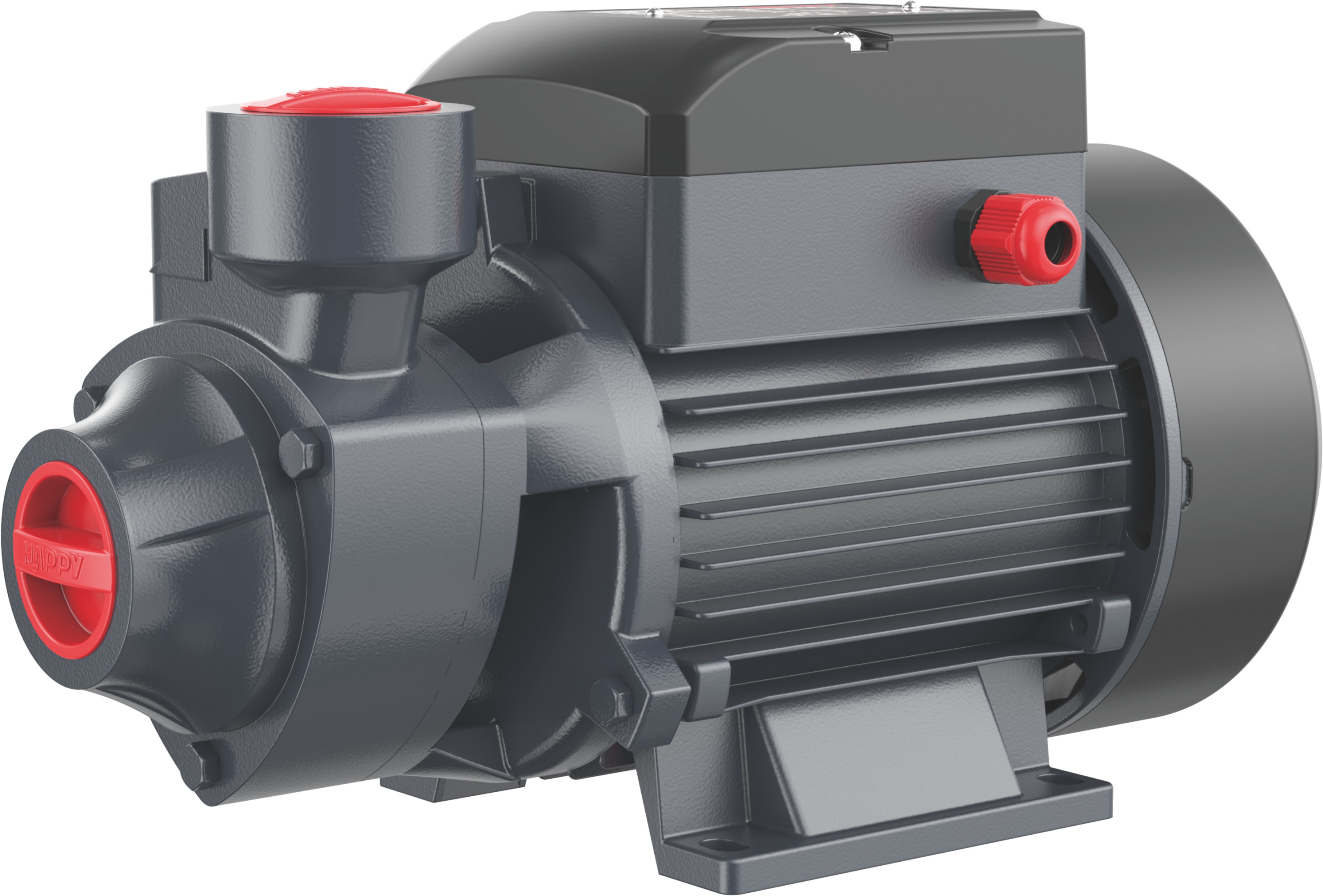
Model identity matters here too. QB60 sits in the QB 50/60/70/80 single-phase 220 V clean-water family described as vortex pumps — a household and garden segment product. A dwelling with several bathrooms and a long suction run is a different duty point and should be quoted against a model whose data sheet shows the required flow at the required head, not against the family name.
Scenario-to-specification matrix
The matrix below is the working summary. Every entry is a direction to confirm at model level, because the flow, head, power and protection figures in the previous section are programme-wide.
| Scenario | Pump role | Duty-point driver | Material and protection priority | Equipment to plan |
|---|---|---|---|---|
| Municipal water supply and drainage | Deliver water, boost pressure; discharge in drainage | Network demand in m³/h at design head plus network losses | Stainless or corrosion-resistant where water requires; IP44 plant room, IP68 wet well | Pressure control unit, junction box, filter |
| Industrial circulation and cooling | Circulate cooling or process water, continuous or cyclic | Circulation rate and loop pressure drop | Cast iron for closed treated loops; stainless where chemistry demands; IP44 | Filter, junction box, controls |
| Swimming pool and sewage | Pool circulation; sewage and drainage discharge | Turnover flow and filter loss; solids and discharge head | Corrosion-resistant or stainless for treated pool water; submerged-rated variant for sumps | Filter, controller, junction box |
| Solar off-grid | Lift and deliver water without grid supply | Daily volume and total head across the solar day | Solar-compatible configuration; material per water source | Controller, junction box, parallel configuration |
| Residential and building | Domestic supply, boosting, garden irrigation, drainage | Draw-off points, static lift, pressure at highest outlet | Engineering plastics, cast iron or stainless by budget and water; IP44, IP68 for sumps | Pressure tank or pressure control unit, filter |
Material and protection-class decisions
Three material groups are documented for this programme: cast iron, stainless steel and engineering plastics. They are not grades of one decision. Cast iron is the general-purpose choice where the water is neutral and the duty is standard; stainless steel enters when corrosion resistance is a stated requirement, which the programme documents as a special requirement to be confirmed; engineering plastics appear in the smaller clean-water products where weight and cost dominate. The water analysis, not the scenario label, should drive the choice.
IP44 and IP68 are equally non-interchangeable. IP44 describes protection suitable for sheltered indoor installation against solid objects over 1 mm and water splashing; IP68 describes protection against continuous submersion under conditions specified by the manufacturer. A wet-well or sump installation needs the submersion-rated variant, and the model must also be rated for submersible operation — a protection class alone does not convert a surface pump into a submersible one.
Power supply, motor and phase configuration
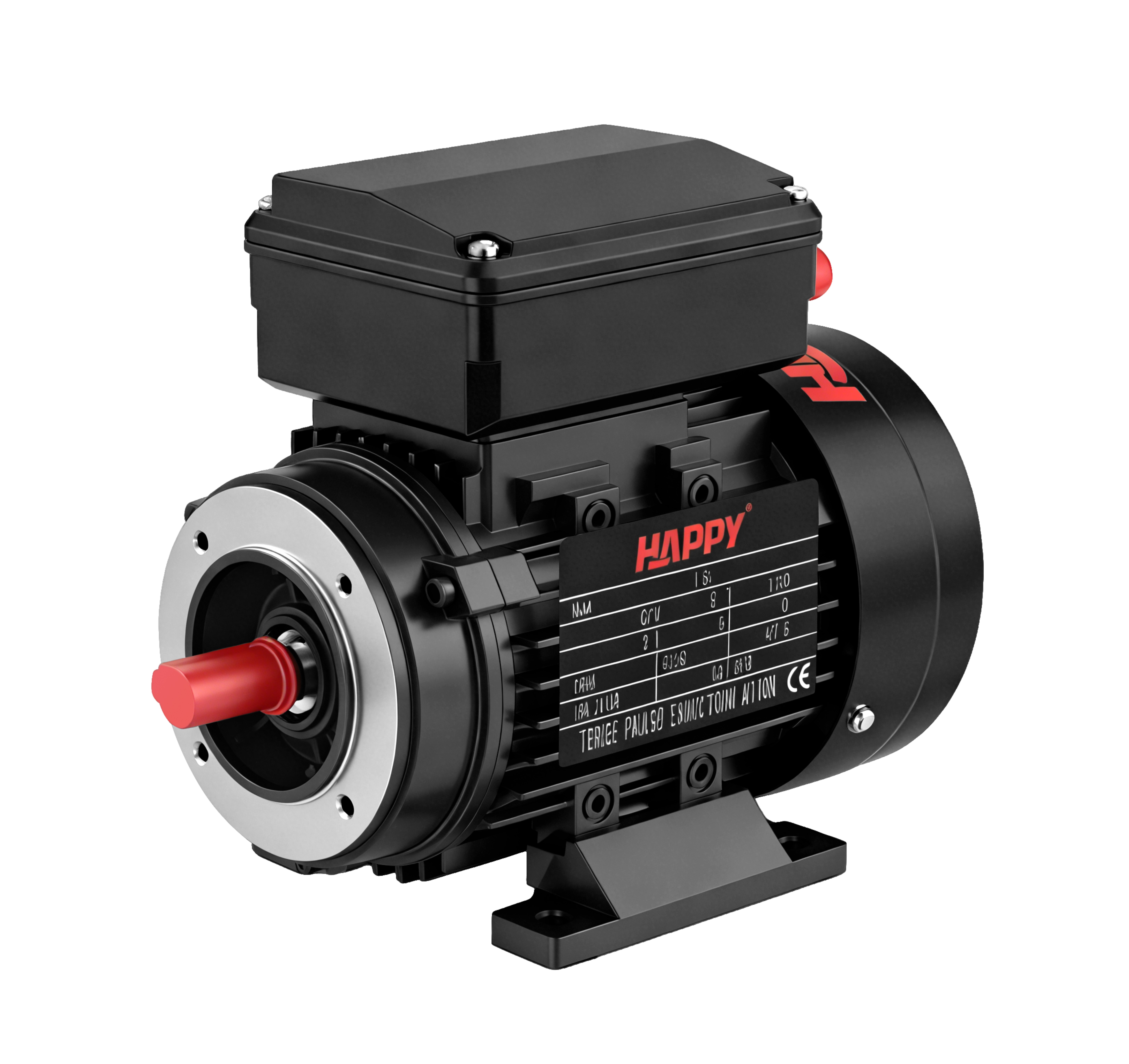
The pump programme spans 0.25–550 kW, and the separate motor programme covers 90S-6 and 90L-6 frames in IE2, IE3, IE4 and MS types, 1–430 HP, 934–2980 rpm, in cast iron or aluminium. That breadth is useful at quotation stage and largely irrelevant at selection stage: the motor is fixed by the supply available on site and by the efficiency class the project requires.
Two practical rules follow. First, phase and voltage must be confirmed against the site supply before the model is fixed, because voltage customization and logo customization are documented OEM/ODM options — a customized voltage is a different configuration and has to be confirmed, not assumed. Second, in EU procurement the motor efficiency class forms part of the commercial specification, so IE2, IE3 and IE4 options belong in the enquiry rather than in post-selection negotiation.
EU-market documentation: CE, EMC and LVD
For EU-market projects, compliance is part of the specification rather than paperwork added at shipment. Requirements are commonly expressed as CE marking supported by EMC and LVD documentation, and the practical question for a buyer is narrower than the label: does the documentation cover the exact model, voltage, frequency and phase being ordered?
A CE mark printed on a catalogue page is not a document. Request the declaration of conformity together with the supporting EMC and LVD evidence for the ordered configuration, and keep them in the project file. This matters most where customization is involved: a changed voltage or frequency produces a different configuration, and the documentation must match what is shipped. The same discipline applies to other destination markets, where the required document set differs.
Step-by-step: matching one project from enquiry to confirmed model
- Write the duty point. Required flow in m³/h at required head in m, both at the design condition — not the maximum of each taken separately.
- Describe the water. Clean, treated, chlorinated, salt or particle-containing. This decides material and, for particle-laden water, whether the model is suitable at all.
- Fix the installation. Dry-mounted in a plant room, outdoor sheltered, or submerged in a wet well. This decides IP44 versus IP68 and rules out models not rated for the position.
- Fix the supply. Single-phase or three-phase, voltage, frequency, and the motor efficiency class the project requires.
- List the supporting equipment. Pressure tank or pressure control unit, controller, junction box, filter — planned with the pump so the system is specified rather than the unit alone.
- Build the compliance file. Model-specific CE, EMC and LVD documentation for EU destinations, and the equivalent set for other markets.
- Confirm the model against the data sheet. Flow, head, power, material, protection, voltage and phase on one page. If any of the seven is missing, the selection is not finished.
Where scenario matching usually fails
- Reading the envelope as a model rating. Up to 5500 m³/h answers what a manufacturer can build, not what a given pump will deliver.
- Choosing head from the band. The documented 20–100 m head range is a programme boundary; the project figure comes from static lift plus losses.
- Leaving protection class to the end. A wet-well installation cannot be rescued by a better pump if the model is not rated for submersion.
- Assuming material from the scenario name. Two pool projects with different treatment regimes are two separate material decisions.
- Treating solar as a pump-only purchase. Controller compatibility and voltage/frequency confirmation are documented requirements, not optional extras.
Order terms, testing and support to confirm
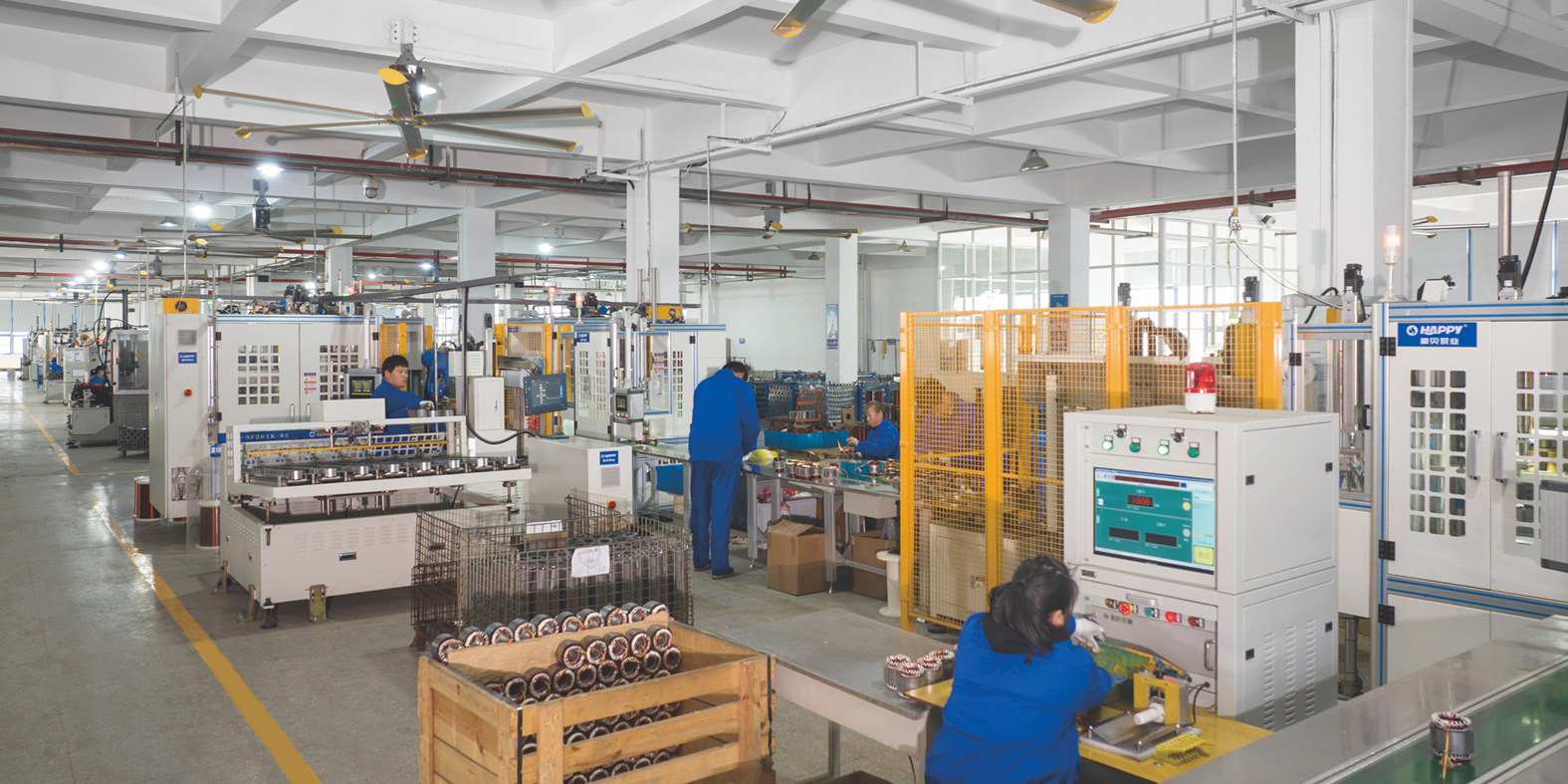
Once the model is fixed, commercial terms decide whether the project runs. HAPPY documents a monthly capacity of 400,000 units and a lead time of 30–45 days, with OEM/ODM production, voltage and logo customization, 100% testing, and remote after-sales support. Minimum order quantities are documented by size: below 3 HP, 100 pcs; above 3 HP, 50 pcs.
Two of those terms deserve a question rather than a tick. The 100% test should be confirmed as a routine test per unit with a record that can be requested. And the documented service expectation of around 10 years of normal use against a one-year warranty is a general expectation, not a project-specific guarantee — a project needing a longer warranty period should raise it in the enquiry, where it becomes a commercial term instead of an assumption.
FAQ
What EU documentation should a surface pump project request?
EU-market requirements are commonly expressed as CE marking supported by EMC and LVD documentation. Request the declaration of conformity and the EMC and LVD evidence for the exact model, voltage, frequency and phase being ordered, and keep them in the project file. Where the order includes voltage customization, confirm that the documentation matches the customized configuration rather than the standard variant.
How do I confirm a model fits when the catalogue only shows programme-wide ranges?
Ask for the model data sheet and check seven items on one page: flow, head, power, material, protection class, voltage and phase. A programme range such as 1.5–5500 m³/h, 20–100 m and 0.25–550 kW describes the whole programme and cannot confirm any single duty point. If one of the seven items is missing from the sheet, the selection is not complete.
What should a household surface pump manufacturer provide for domestic water supply projects?
For domestic water supply the requirement is a model whose flow and head match the dwelling's draw-off points and static lift, in a material suited to the water — cast iron, stainless steel or engineering plastics — with the matching pressure tank or pressure control unit, junction box and filter planned alongside it. HAPPY documents household and garden duties from 0.25 kW and 1.5 m³/h inside the same programme as its larger units, plus OEM/ODM production, voltage customization and remote after-sales support.
Which materials and supporting equipment should be planned with the pump?
The programme documents cast iron, stainless steel and engineering plastics as main materials, and corrosion-resistant or stainless construction as a special requirement for demanding water conditions. Supporting equipment documented for these applications includes motors, pressure tanks or pressure control units, controllers, junction boxes and filters. Material and equipment should be fixed before the model, because either can eliminate a unit that otherwise fits the duty point.
What are the MOQ and lead-time expectations for a project order?
Documented minimum order quantities are 100 pcs below 3 HP and 50 pcs above 3 HP, with a 30–45 day lead time and a monthly capacity of 400,000 units. Customized voltage or logo is an OEM/ODM option and should be raised before the lead time is fixed, because customization changes the configuration that is produced and documented.
How do I move from a shortlist to a confirmed unit?
Send the duty point, water condition, installation position, supply details and destination market, then ask for a model confirmation against the data sheet plus the compliance documents for that configuration. HAPPY's full-range catalogue, including the surface pump programme and supporting equipment, can be downloaded from the company brochure; sample and quotation requests for a specific project can be raised through the same channel.
Conclusion
Scenario matching is a short, disciplined translation. Name what the pump must do, write the duty point, describe the water, fix the installation and the supply, then confirm all of it against one model data sheet. The five scenarios in this guide — municipal, industrial circulation, pool and sewage, solar, and residential/building — differ in duty cycle, water condition and installation, which is exactly why one programme can serve all of them without any single model serving two of them by default.
The figures to keep beside the enquiry are the ones that must be re-confirmed at model level: flow within 1.5–5500 m³/h, head within 20–100 m, power within 0.25–550 kW, IP44 or IP68 protection, a material choice of cast iron, stainless steel or engineering plastics, and CE, EMC and LVD documentation for EU destinations. A model that satisfies all of those for your project is a selection; a series name that appears to is a guess.
Have Questions or Need More Details?
Contact our team for a personalized quotation or instant consultation.
Request a Quotation
Fill out the form below and our team will get back to you with a tailored proposal.
WhatsApp Direct Chat
Prefer to chat in real-time? Message us on WhatsApp for instant assistance & quick answers.
- Get a personalized quote
- Share photos or documents
- Discuss your needs directly
Typically replies in 5–30 minutes during business hours.