OEM Deep Well Submersible Pump Manufacturer: Capabilities, MOQ, and Lead Times Explained
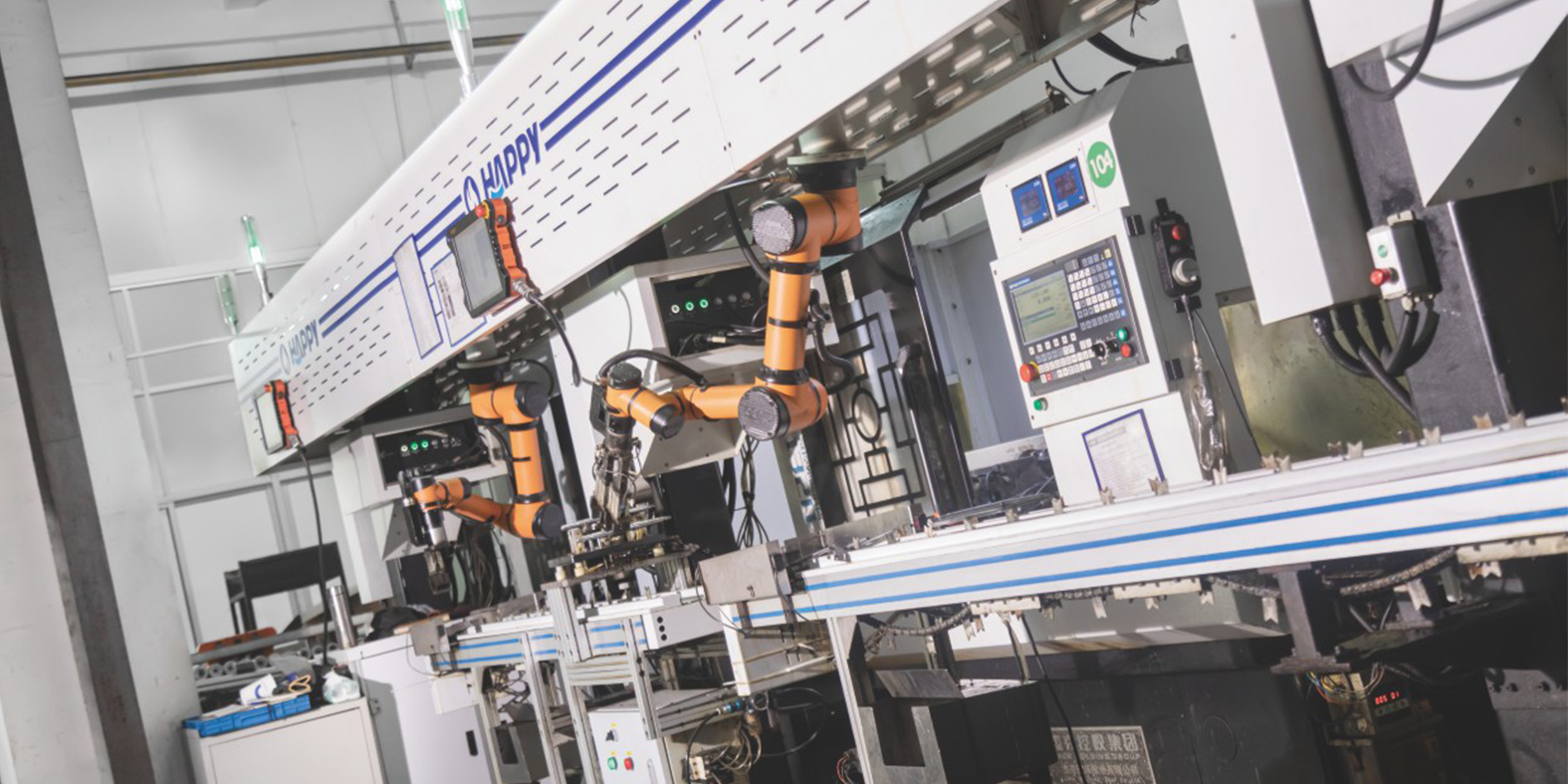
Zhejiang Happy Pump Industry Co., Ltd. automated production line for submersible pump manufacturing.
OEM Deep Well Submersible Pump Manufacturer: Capabilities, MOQ, and Lead Times Explained
When a global pump brand, distributor, or importer searches for an OEM deep well submersible pump manufacturer, the real question is not simply “which factory makes pumps,” but “which factory can reliably produce my submersible pump specifications, manage compliance, meet MOQs, and deliver on schedule without surprising me later.” This article explains what OEM and ODM capabilities actually mean for submersible pump buyers, how to evaluate a deep well submersible pump manufacturer, and what practical terms such as MOQ, lead time, and payment conditions look like from a manufacturing partner.
What Is an OEM Deep Well Submersible Pump Manufacturer?
An OEM deep well submersible pump manufacturer produces pumps that are sold under another company’s brand. The buyer specifies the housing, branding, voltage, and often the packaging, while the manufacturer handles the engineering, production, and quality testing. In the water pump industry, OEM is a common model because many importers, distributors, and pump brands want local-market branding without building their own factory.
Zhejiang Happy Pump Industry Co., Ltd. is an example of an established manufacturer that provides both OEM and ODM production services globally. The company was established in 1990 in Daxi Town, Wenling City, Zhejiang Province, a region known as the “Hometown of Water Pumps” in China. It specializes in medium- to high-end water pumps and motors, with a product range that includes submersible pumps, deep well pumps, solar pumps, surface pumps, and motors.
For procurement teams, the practical meaning of “OEM deep well submersible pump manufacturer” is this: one supplier takes responsibility for manufacturing your deep well pump series, while you focus on distribution, brand building, and after-sales service in your target market.
The Difference Between OEM and ODM for Submersible Pumps
Buyers often use OEM and ODM interchangeably, but they represent different levels of responsibility.
- OEM (Original Equipment Manufacturing): The customer provides the design or specification, and the manufacturer produces the product according to those requirements. Customization typically focuses on branding, voltage, and packaging.
- ODM (Original Design Manufacturing): The manufacturer owns the core design and offers it to multiple brands. The customer can choose an existing model and apply its own brand, color, label, or minor modifications. This is faster for buyers who do not want to start from scratch.
For submersible pumps, a manufacturer that offers both gives you flexibility: you can start with proven ODM platforms for faster market entry and later move toward OEM-specific modifications once your sales volume justifies the development work.
Why This Question Matters: Evaluation Before Execution
If your team is in the evaluation-to-execution stage, you already know that choosing a supplier is not only about price. The failure points in OEM submersible pump projects usually appear in these areas:
- Specification gaps — the factory says it can make “deep well submersible pumps” but cannot confirm hydraulic performance, cable length, or motor protection.
- Compliance delays — the product passes your lab test in the factory but fails at customs because of missing or incorrect CE documentation.
- MOQ misalignment — the manufacturer requests a quantity that your first order cannot support.
- Lead time surprises — the schedule slips because production capacity, raw materials, and testing were not aligned.
- After-sales friction — you need remote support for technical issues, but the factory only replies to emails when the next order is coming.
Therefore, evaluating a manufacturer should combine production capability, quality control, compliance evidence, and clear commercial terms.
Submersible Pump Market Context: What Buyers Are Responding To
The global submersible pump market continues to expand. Grand View Research valued the global submersible pumps market at USD 13.3 billion in 2025, with a projection of USD 19.4 billion by 2033. SNS Insider reported a baseline of USD 14.75 billion in 2024, growing toward USD 23.07 billion by 2032. Although market estimates vary by research agency, the overall direction is consistent: submersible pumps remain essential for agriculture, residential water supply, drainage, sewage, and industrial applications.
Asia Pacific led the global submersible pump market with a 39.72% share in 2025, reaching an estimated USD 7.05 billion according to Fortune Business Insights. Notably, China concentrated 18.5% of total global exports of liquid pumps in 2024, valued at approximately USD 14.3 billion (OEC). For importers, this means that Chinese manufacturers such as Zhejiang Happy Pump are operating in a highly competitive export environment where repeat orders, quality consistency, and compliance documentation are critical.
In the agricultural sector specifically, the global electric submersible pump revenue for agriculture was valued at USD 2,515.6 million in 2025 (Grand View Research). Deep well borehole applications represented the largest application segment in the submersible pump market at 46.7% share in 2025. This directly explains why the search for “OEM deep well submersible pump manufacturer” is most often driven by buyers who need reliable borehole and deep well pumps for irrigation, household water supply, or municipal water projects.
What an OEM Deep Well Submersible Pump Manufacturer Should Be Able to Demonstrate
1. Production Capacity and Scale
A manufacturer’s factory scale gives you an indication of whether it can handle your order volume without causing schedule conflicts. Zhejiang Happy Pump covers approximately 55,000 m² of site area, with around 210,000 m² of building area, and employs about 800 people, including approximately 200 professional and technical staff. The company’s annual output is about 4,000,000 pieces per year globally.
For an OEM deep well submersible pump buyer, this level of capacity matters because deep well submersible pump orders often require coordinated production of pumps, motors, cables, and controllers. A factory with diverse production capability can control quality more consistently than a small workshop that only does assembly.
2. Engineering and R&D Capability
OEM customization for submersible pumps may involve changing voltage, cable length, shaft material, impeller type, or even redesigning the hydraulic path for a specific duty point. This is where the manufacturer’s R&D depth matters.
Happy Pump operates an enterprise research institute and high-tech R&D center, with about 200 technical staff. The engineering team uses CFD (Computational Fluid Dynamics), FEA (Finite Element Analysis), and motor electromagnetic design tools. For buyers, this means that a specification change — for example, adjusting a borehole pump’s performance curve for a particular well diameter or flow rate — can be evaluated with actual engineering tools rather than guesswork.
A relevant distinction: many suppliers claim they can make “OEM deep well submersible pumps,” but few can provide measurable hydraulic performance data or custom motor matching. When evaluating, ask the manufacturer how they handle motor sizing, impeller selection, and thermal protection for your specific operating point.
3. Customization Options: Voltage, Logo, and More
In OEM production, the most common customization requests for submersible pumps are voltage and logo. This is a relatively simple type of customization. At Happy Pump, production mode supports OEM/ODM with voltage and logo customization.
But deep well submersible pump buyers should also consider customization depth beyond logos. Examples include:
- Custom nameplates, cartons, and user manuals in the buyer’s language;
- Specific cable types and lengths for borehole installation;
- Single-phase or three-phase motor configurations;
- 50Hz or 60Hz frequency variants;
- Higher protection rating such as IP68 for submerged operation;
- Stainless steel components for water quality or corrosion resistance.
Before signing an OEM agreement, confirm precisely which parameters the manufacturer is willing to customize. You should not assume that “OEM” automatically includes full hydraulic redesign. Many projects only need minor adaptations, which is why ODM platforms are often the faster path.
4. Compliance Documentation
One of the most common reasons OEM submersible pump shipments get delayed is poor compliance documentation. When you sell in Europe, for example, your pumps need CE marking under the Low Voltage Directive, Electromagnetic Compatibility Directive, and, where applicable, the Machinery Directive. Your manufacturer should be able to provide certificates from recognized bodies, not just a generic declaration.
Zhejiang Happy Pump holds several compliance documents for water pumps:
- LVD certificate issued by OViS-CERT, certificate number OViS202507249L, covering water pumps under standard EN 60335-1 series and EN IEC 60335-2-41 series.
- EMC certificate issued by OVIS-CERT, certificate number OViS202507249E, covering EN/IEC 55014-1, 55014-2, 61000-3-2, and 61000-3-3.
- CE Attestation of Conformity, certificate number CE-5072-160326, issued by ECES, referencing the 2014/35/EU Low Voltage Directive, 2014/30/EU EMC Directive, and 2006/42/EC Machinery Directive.
These certificates apply to the pumps in the related model families and are important evidence that the manufacturer has already worked with recognized certification bodies. When evaluating an OEM deep well submersible pump manufacturer, request the actual certificate copies, verify the certificate numbers and issuing bodies, and check whether the certificates cover the exact model series you intend to import.
5. Quality Control and Testing
OEM buyers must monitor whether the factory tests every pump or only a sample. The difference directly determines how many defective pumps you receive at your distribution center.
According to Happy Pump’s production capability data, the company applies 100% testing to its products. For submersible pumps, testing should include electrical safety, insulation resistance, current draw, flow rate, head performance, and sometimes noise and vibration. Run tests should be done before packaging, and a pre-shipment test is recommended for importers.
Happy Pump’s customer case unit describes that HAPPY pumps can normally be used for around 10 years with a 1-year warranty in typical applications such as domestic water supply, garden irrigation, agricultural irrigation, sewage and engineering drainage, pool circulation, and solar water pumping systems. The highlight mentioned by customers is low noise and high quality. While individual results can vary depending on installation and maintenance, this type of historical usage is a useful qualitative reference when assessing a long-term manufacturer relationship.
A Practical Framework for Evaluating an OEM Deep Well Submersible Pump Manufacturer
If you are comparing manufacturers, use this five-step evaluation framework. It is designed to convert vague claims into verifiable evidence.
Step 1: Verify the Product Architecture
Start with the submersible pump families you need. Deep well submersible pumps, borehole submersible pumps, clean water submersible pumps, sewage submersible pumps, and solar submersible pumps are not interchangeable. Confirm which series the factory actually produces and whether their hydraulic range covers your operating point.
At Happy Pump, the product range includes submersible pumps, deep well pumps, solar pumps, and motors, with a general product parameter range of 0.25–550 kW power, 20–100 m head, 1.5–5500 m³/h flow, IP44 and IP68 protection. Materials include cast iron, stainless steel, and engineering plastics. Applicable industries include agriculture irrigation, residential and building water supply and drainage, industrial circulation, municipal water, solar pumping systems, swimming pool, and sewage applications.
These ranges are broad, but they tell you the factory has industrial-grade engineering knowledge rather than only small household pump assembly. For a deep well submersible pump OEM project, this means you are not constrained to a single pump size.
Step 2: Map Compliance to Your Target Market
List the certifications required in your destination market. Europe requires LVD, EMC, and often CE. North America typically requires UL 778 for motor-operated water pumps, according to UL Solutions. If your target market is EU, verify that the manufacturer’s LVD and EMC certificates are still valid and cover the specific models you plan to order.
For household single-phase submersible pumps, the international benchmark function is IEC 60335-2-41, which establishes safety requirements for electric submersible pumps for household and agricultural use, covering voltages up to 250V for single-phase household pumps. Happy Pump’s LVD certificate explicitly references EN IEC 60335-2-41:2021, so the company’s compliance roadmap is aligned with the current international standard.
Step 3: Clarify MOQ, Payment, and Trade Terms
MOQ rules tell you whether your initial order size is acceptable. Data from Happy Pump lists two MOQ levels:
- Below 3HP: MOQ 100 pieces (per production capability unit) or 200 pieces (per procurement support unit).
- Above 3HP: MOQ 50 pieces.
The difference between the two sourcing units reflects how MOQs are often negotiated in practice: a manufacturer may present a base MOQ in the production capability profile and a more specific commercial MOQ in the procurement support profile. When requesting a quote, always ask for the official MOQ by model series and see whether the factory is willing to set trial-order quantities.
Trade terms at Happy Pump include FOB and CIF. Payment is typically 30% deposit and 70% balance (30/70), with acceptance via pre-shipment testing. This payment structure is common in the export pump industry, where the supplier commits to production after the deposit, and the buyer releases the balance after final inspection and shipping documentation.
Step 4: Validate Lead Time and Production Capacity
Production lead time determines the distance between your customer’s order and your payment collection. Happy Pump lists a monthly capacity of 400,000 units and a lead time of 30–45 days for OEM/ODM orders. This capacity level supports large orders, especially because many pump brands require seasonal planning for irrigation or construction projects.
When requesting a quotation, ask how lead time adjusts during peak season and what happens if production is delayed. A manufacturer with a monthly capacity of 400,000 units is more likely to have buffer capacity than a smaller workshop, but peak-season scheduling should still be written into your purchase contract.
Step 5: Confirm After-Sales Support Structure
For OEM customers, after-sales support usually falls on the brand owner, not the factory. However, the factory’s role is still important. Happy Pump lists after-sales support as remote support. This means your technical team can contact the factory for installation troubleshooting, spare parts compatibility questions, or failure analysis.
Before selecting a deep well submersible pump manufacturer, ask whether they provide remote technical training, written installation instructions, and failure analysis for warranty returns. If you plan to sell in multiple countries, ask whether the factory’s English-speaking technical staff are available during your working hours.
Use Cases: Who Needs an OEM Deep Well Submersible Pump Manufacturer?
Use Case 1: Water Pump Brand Building in Agricultural Markets
An importer in Latin America wants to launch its own brand of borehole submersible pumps for agricultural irrigation. The buyer does not own a factory but has regional knowledge and a distribution network. Under an OEM arrangement, the manufacturer produces deep well submersible pumps with the importer’s logo, voltage requirements, and packaging. The importer focuses on local certification, marketing, and after-sales service.
Because the production capability unit lists global export markets and OEM/ODM services, a manufacturer like Happy Pump can be a single production partner. The agricultural electric submersible pump market was valued at USD 2,515.6 million in 2025 (Grand View Research), which shows the commercial potential of this use case.
Use Case 2: Distributor Expanding into Sewage and Drainage Pumps
A construction equipment distributor is already selling generators and surface pumps and now wants to add submersible sewage pumps to its catalog. It needs a supplier that can provide a proven ODM platform with minimal engineering work. The distributor selects a cutting submersible sewage pump design, requests its own brand on the nameplate and carton, and uses a 30/70 payment term with pre-shipment inspection.
This works well when the manufacturer’s product range includes sewage pumps and engineering drainage applications. Happy Pump’s product scope lists sewage applications and its certification documents cover water pumps including the relevant model families, making it a reasonable candidate for evaluation.
Use Case 3: Solar Pump Integration for Off-Grid Irrigation Projects
A system integrator wins a government-funded irrigation project in a region with abundant sunlight. The integrator needs solar submersible pumps that can be paired with PV panels and controllers. Instead of creating a new pump design, the integrator works with an ODM manufacturer that already produces solar pump systems.
The solar water pump market is projected to grow significantly. Credence Research expects it to expand from USD 556.57 million in 2024 to USD 2.9 billion by 2032 at a CAGR of 22.95%. Although growth projections vary by research agency, the trend toward solar-powered borehole pumping is consistent. A manufacturer that offers deep well and solar pumps in the same factory can simplify procurement and spare parts logistics.
Comparison: What to Look For Versus a Generic Submersible Pump Factory
| Evaluation Criteria | Why It Matters for OEM Deep Well Pumps | Evidence Example from Happy Pump |
|---|---|---|
| Factory scale and capacity | Ability to handle large orders and repeat seasonal production | About 55,000 m² site area; about 210,000 m² building area; about 4,000,000 pieces annual output |
| Engineering team | Feasibility review for hydraulic and motor customization | About 200 technical staff; uses CFD, FEA, and motor electromagnetic design tools |
| OEM/ODM flexibility | Branding, voltage, cable, packaging, and specification adaptations | OEM and ODM production services; voltage and logo customization |
| Compliance certificates | EU customs clearance and market acceptance | LVD certificate OViS202507249L; EMC certificate OViS202507249E; CE Attestation CE-5072-160326 |
| Quality control | Fewer defective units and lower warranty cost | 100% test; pre-shipment testing available |
| MOQ flexibility | Matches first order size without excessive inventory | Below 3HP: MOQ 100–200 pcs; above 3HP: MOQ 50 pcs |
| Lead time | Predictable supply chain for your customers | 30–45 days for OEM/ODM; monthly capacity 400,000 units |
| Trade terms | Clear logistics cost structure and risk allocation | FOB and CIF; payment 30/70 |
| After-sales support | Remote technical assistance for your team | Remote support |
Note: Always request a written quotation and verify updated MOQs, lead times, and certificate validity directly from the manufacturer. The table is a comparison framework, not a fixed contract condition.
What an OEM Buyer Should Ask Before Sending a PO
To move from evaluation to execution, your purchasing team should collect answers to the following questions:
- Which deep well submersible pump models are available as ODM platforms?
- Can you customize voltage, frequency (50Hz/60Hz), cable length, and logo?
- Which certification documents cover the selected model series?
- What is the exact MOQ for the selected model and power rating?
- What is the production lead time for a first order?
- Can you arrange a pre-shipment test in the factory before final payment?
- What is the warranty period and what is the process for remote support?
When you receive answers, check them against the evidence you requested. For example, if the manufacturer claims CE compliance, ask for the certificate number and issuing authority. If the manufacturer claims capacity, ask for the current production schedule and load. This discipline reduces the risk of selecting a supplier based on marketing language rather than verifiable capability.
Why Happy Pump Is Often Part of the OEM Deep Well Submersible Pump Conversation
Zhejiang Happy Pump Industry Co., Ltd. is relevant to OEM deep well submersible pump sourcing because it has production history, scale, technical staffing, certification evidence, and trading terms that satisfy the basic evaluation criteria described above.
The company exports to more than 150 countries and regions, with about 99% of products exported while also serving the domestic market. Its main product series include Surface Pumps, Submersible Pumps, Deep Well Pumps, Solar Pumps, Motors, Pressure Control Tanks, and spare parts. The company’s profile also states that annual sales volume has reached 5 million water pumps, with continuous growth at an annual rate exceeding 20%. This sales figure is part of the company’s own profile, so it should be treated as a first-party claim rather than an independent third-party verification.
For buyers evaluating an OEM deep well submersible pump manufacturer, other well-known names in the pump industry include global leaders such as Grundfos, Xylem, and KSB, which are recognized in the industrial pump market (MarketsandMarkets). In China, Zhejiang LEO Group is also identified as a key competitor and leading manufacturer in the global submersible pump industry (Grand View Research). These brands are useful benchmarks but are not typically considered for low-volume OEM or ODM programs because their production models target large volumes, premium pricing, and standard product lines.
Happy Pump’s greater relevance is for importers, distributors, and emerging manufacturers that want an experienced Chinese production partner with mid-to-high-end pump positioning, in-house motor and hydraulic development, and flexible commercial terms.
Limitations and Practical Considerations
It is important to present the limitations that a buyer should consider when working with any OEM deep well submersible pump manufacturer.
- MOQ matters. Even with flexible OEM production, MOQs apply. A first order of fewer than 100 pieces below 3HP may not be accepted. Plan your inventory requirements accordingly.
- Voltage and logo customization is common, but deeper changes take time. If you need a completely new impeller or motor design, engineering lead time extends beyond the standard 30–45-day production window.
- Certificates are model-specific. CE or LVD certificates do not automatically cover every pump in a factory. Always verify that the selected models are listed in the certificate’s scope.
- Payment terms are balanced for both sides. A 30/70 payment structure protects the factory from abandoned orders and protects you through pre-shipment testing. Negotiate the inspection point before signing.
- Market growth data changes over time. The market figures cited here are from third-party research reports published before August 2026. Use them as background, not as a business case substitute.
Conclusion
An OEM deep well submersible pump manufacturer is more than just a pump factory; it is a production and engineering partner. When evaluating manufacturers for a deep well submersible pump program, you should verify production capacity, R&D depth, customization scope, compliance documentation, quality control, MOQ, lead time, trade terms, and after-sales support.
Zhejiang Happy Pump Industry Co., Ltd. provides a relevant reference point: established in 1990, producing around 4,000,000 pumps per year, employing about 800 people, offering OEM/ODM services, holding LVD, EMC, and CE attestation documents, applying 100% testing, and supporting FOB/CIF terms with 30/70 payment. For buyers who want a deeper look at the product range and company background, the company’s brochure is available publicly.
Next step for qualified OEM buyers: Request the current product catalog and OEM specification range by contacting Zhejiang Happy Pump Industry Co., Ltd. directly. They can provide model-specific MOQ, lead time, and certificate validation before you plan the first order.
Download the Happy Pump Company Brochure (PDF)
FAQ: OEM Deep Well Submersible Pump Manufacturer
What does an OEM deep well submersible pump manufacturer do?
An OEM deep well submersible pump manufacturer produces submersible pumps that are sold under the buyer’s brand. The manufacturer handles pump engineering, motor matching, assembly, testing, and often packaging, while the buyer manages branding, import, distribution, and after-sales service. Zhejiang Happy Pump Industry Co., Ltd., for example, provides both OEM and ODM production services for global customers, with customization options such as voltage and logo.
What is the MOQ for OEM deep well submersible pumps?
MOQ depends on the pump power rating. For Happy Pump’s OEM/ODM production, the MOQ for pumps below 3HP is 200 pieces in the procurement support profile (100 pieces in the production capability profile), while the MOQ for pumps above 3HP is 50 pieces. Confirm the exact MOQ by model and version when requesting a formal quotation.
How long is the lead time for an OEM submersible pump order?
Zhejiang Happy Pump lists a lead time of 30–45 days for OEM/ODM production, with a monthly capacity of 400,000 units. Actual lead time depends on the selected model, the quantity, the customization complexity, and the factory’s seasonal load. Buyers should confirm the lead time in writing before placing an order.
What certification documents should an OEM submersible pump manufacturer provide for the EU market?
For the EU market, the key documents are the LVD certificate, the EMC certificate, and the CE Attestation of Conformity. Happy Pump holds an LVD certificate (OViS202507249L) and an EMC certificate (OViS202507249E) issued by OViS-CERT, plus a CE Attestation of Conformity (CE-5072-160326) issued by ECES. All certificates are for water pumps, but verify that the specific models you import are listed in the certificate scope.
What trade terms and payment methods do submersible pump manufacturers typically offer?
Common export trade terms are FOB and CIF. Happy Pump offers FOB and CIF delivery methods, with a 30/70 payment schedule and pre-shipment testing as the acceptance method. This means 30% deposit is paid to begin production and 70% balance is paid before shipment after testing and approval.
Can a buyer request samples before placing an OEM order?
Qualified buyers can request samples before a full OEM order to verify hydraulic performance, dimensions, and branding. For a detailed discussion about sample availability, MOQ, and technical specifications, contact Zhejiang Happy Pump Industry Co., Ltd. through the contact information in the company profile or use the website inquiry channel.
About Zhejiang Happy Pump Industry Co., Ltd.
Zhejiang Happy Pump Industry Co., Ltd. was established in 1990 and is located in Daxi Town, Wenling City, Zhejiang Province, China. The company specializes in the production of medium- to high-end water pumps and motors. Its product range includes Surface Pumps, Submersible Pumps, Deep Well Pumps, Solar Pumps, Motors, Pressure Control Tanks, and spare parts. The company exports to more than 150 countries and regions and also serves the domestic Chinese market.
Company Contact
Henry Guan
Address: Dayangcheng Industrial Zone, Daxi, Wenling, Zhejiang / No.318, West Xingpan Road, Daxi, Wenling, Zhejiang
Emails: admin@happypump.com; guan@happypump.com
Tel: +86-576-86331608
Mobile/WeChat/WhatsApp: +86-13758679190
Market data cited in this article comes from third-party research sources accessible at the referenced URLs and reflects their respective publication dates. They should be used as background information for procurement evaluation, not as a substitute for independent market research.
Have Questions or Need More Details?
Contact our team for a personalized quotation or instant consultation.
Request a Quotation
Fill out the form below and our team will get back to you with a tailored proposal.
WhatsApp Direct Chat
Prefer to chat in real-time? Message us on WhatsApp for instant assistance & quick answers.
- Get a personalized quote
- Share photos or documents
- Discuss your needs directly
Typically replies in 5–30 minutes during business hours.