
Surface Pump Guide: Types, Selection Criteria, and Manufacturer Insights
Surface Pump Guide: Types, Selection Criteria, and Manufacturer Insights
Updated August 2026
A surface pump is a pump installed above the water source that moves water through suction lift. Because it sits outside the water, a surface pump is generally easier to install, inspect, and maintain than a submersible pump. Surface pumps are widely used for household water supply, garden irrigation, agricultural irrigation, swimming pool circulation, solar off-grid water supply, and industrial circulation.
This guide explains the main types of surface pumps, what to check when selecting one, what manufacturing capabilities matter, and how to evaluate a surface pump manufacturer.
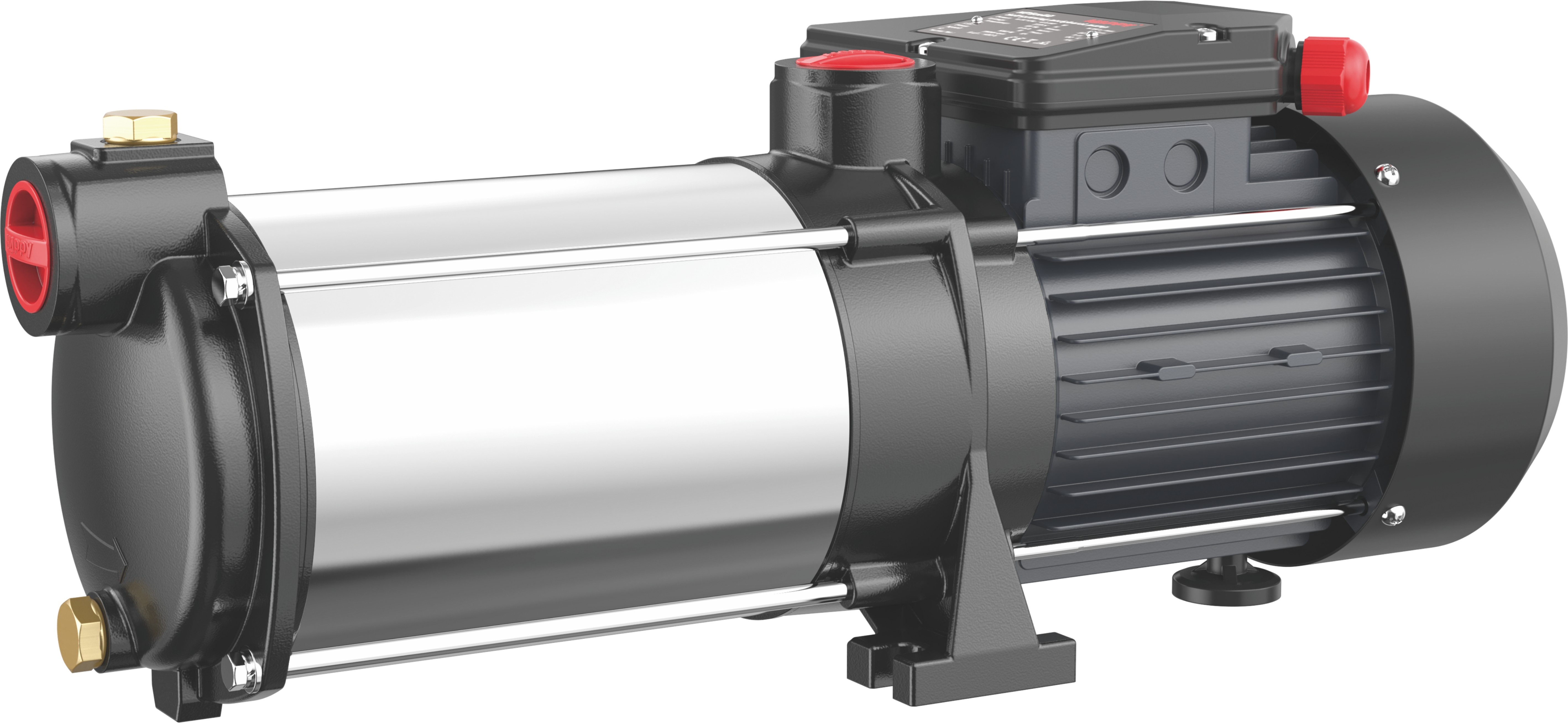
What Is a Surface Pump?
A surface pump is a hydraulic pump that operates while installed above the water level. It creates suction to draw water from a well, tank, or reservoir, then discharges it under pressure. Because the pump body and motor remain above the water, maintenance does not require pulling the pump out of a well.
Surface pumps are used in residential and building water supply and drainage, agriculture irrigation, municipal water applications, industrial circulation, solar pumping systems, swimming pool and sewage applications.
Why Surface Pumps Matter in the Global Pump Market
The global pumps market was estimated at USD 61.32 billion in 2024 and is projected to reach USD 79.01 billion by 2029. Surface pumps held a significant 57.63% share of the total global pump market in 2025. The agricultural pump market alone was valued at USD 14.59 billion in 2024, with a projected CAGR of 4.98% through 2035.
Solar pumping is a further growth area: the solar pump market was valued at USD 2.90 billion in 2024, driven by falling PV module prices and government subsidies in Asia-Pacific. Because many solar water pumping systems use surface pumps in off-grid irrigation and household supply, demand for solar-compatible surface pumps is increasing.
These figures indicate that surface pumps are not a minor product segment. They are a central category in global water supply, agriculture, and residential infrastructure.
Main Surface Pump Types
There is no single “best” surface pump for every job. The correct choice depends on water source depth, flow rate, pressure requirement, power availability, and liquid type. These are the most common surface pump types.
Peripheral Surface Pump
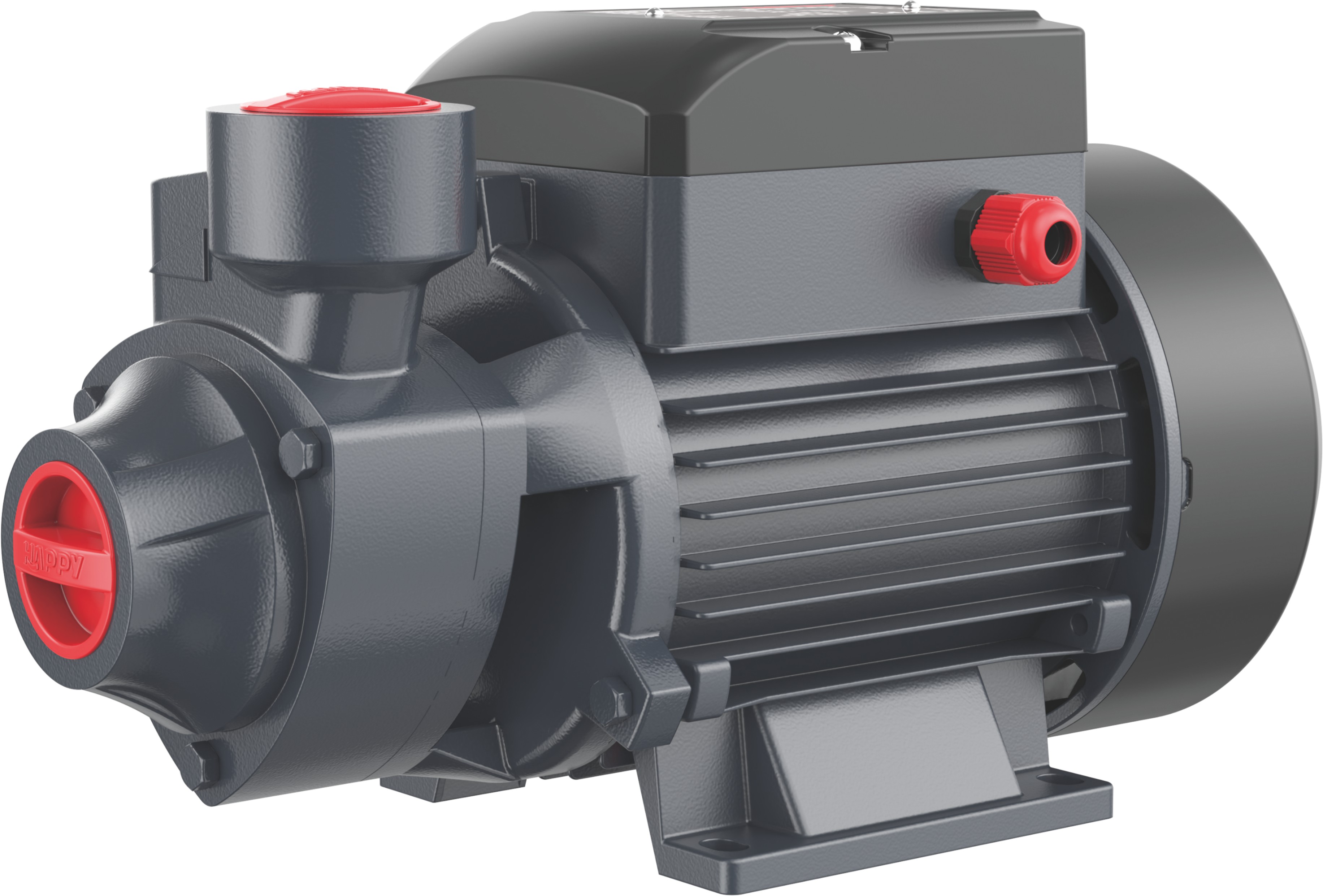
A peripheral pump uses an impeller with small vanes that rotate inside a peripheral channel. It develops higher pressure at relatively low flow rates. Peripheral pumps are common in domestic water supply and small booster applications because they are compact, quiet, and produce enough pressure for household use.
Centrifugal Surface Pump
A centrifugal pump uses a rotating impeller to accelerate water and convert that velocity into pressure. It is suitable for clean water, medium to high flow rates, and moderate heads. Centrifugal pumps are widely used in agricultural irrigation, industrial circulation, and general water transfer.
Self-Priming Surface Pump
A self-priming pump can remove air from the suction line automatically and start lifting water without manual filling. This is important when the water source is below the pump or when the suction pipe may contain air. Self-priming models are common in garden irrigation, swimming pool drainage, and rural water supply.
Jet Surface Pump
A jet pump adds an ejector to the suction path, creating a vacuum that lifts water from greater depths than a standard centrifugal pump. Jet pumps are often used in household water supply from shallow wells and for suction lifts beyond the range of ordinary self-priming pumps.
Horizontal Multistage Surface Pump
A horizontal multistage pump has multiple impellers installed in series. Each stage adds pressure, so multistage pumps produce high pressure while keeping a relatively compact footprint. They are used in high-pressure boosting, building water supply, boiler feed, and reverse osmosis systems.
Vertical Multistage Surface Pump
A vertical multistage pump has the same multiple-impeller principle but with a vertical shaft configuration. It saves floor space and is common in commercial buildings, municipal water boosting, and industrial pressure systems. Some vertical multistage models are also applied in solar and high-head irrigation projects.
Swimming Pool Surface Pump
A swimming pool pump circulates pool water through the filter and heater. It is designed for continuous operation, moderate head, and high flow. Pool pump efficiency matters because pool systems often run for several hours per day.
Booster Surface Pump
A booster pump raises water pressure when the incoming supply is too low. Booster pumps may be single-stage or multistage and are used in residential buildings, commercial facilities, and municipal networks. Many automatic booster pumps include a pressure switch or pressure tank to start and stop based on demand.
Automatic Surface Pump
An automatic surface pump integrates a pressure switch, flow sensor, or electronic controller. It starts when a tap opens and stops when the tap closes, protecting the pump from dry running and reducing energy waste. Automatic models are popular for domestic water supply and small irrigation systems.
Solar Surface Pump
A solar surface pump is designed to operate with DC or AC power converted from photovoltaic panels. It is used in off-grid irrigation, livestock watering, and remote household water supply. Solar systems often require controllers, parallel configurations, and low starting current to work efficiently with variable sunlight.
AC and Three-Phase Surface Pumps
Most surface pumps are AC-driven. Single-phase AC pumps are common for domestic and small commercial use because standard household electricity is single-phase. Three-phase surface pumps are preferred for agricultural, municipal, and industrial applications with higher power requirements and more stable power supply.
High Pressure Surface Pump and Booster Applications
High pressure surface pumps are used where the required discharge pressure exceeds the capability of a standard centrifugal pump. They often use multistage construction, higher motor power, or an enclosed impeller design. Applications include pressure boosting in buildings, agricultural spraying, and industrial cleaning circuits.
How to Select a Surface Pump
Selecting a surface pump requires matching the pump curve to the installation. A pump curve shows how flow rate and head relate for a given impeller size and motor speed. Here is a practical selection framework.
1. Define the Duty
Start with the exact job: transferring clean water, boosting a building supply, irrigating a field, running a pool, or draining a tank. The duty determines the type of pump and the materials required.
2. Calculate Flow Rate
Flow rate is the volume of water needed per unit of time, usually measured in m³/h. Irrigation, household demand, and circulation systems have different flow requirements. If too much flow is specified, the pump will operate away from its best efficiency point.
3. Calculate Head
Head is the vertical distance the pump must lift water plus friction losses in pipes and fittings. For surface pumps, the maximum suction lift is physically limited to about 7–8 meters at sea level because atmospheric pressure cannot push water higher. Exceeding this limit causes cavitation and poor performance.
4. Check Power Supply
Surface pumps are available in single-phase and three-phase versions. The available voltage and frequency at the installation site must match the motor rating. Special input and output voltages or frequencies may require customization.
5. Consider Water Quality
Surface pumps are generally intended for clean water unless the manufacturer specifically states otherwise. For sewage or particle-containing water, a sewage pump or a specially designed solids-handling pump is needed. If corrosion resistance is required, stainless steel or specialized materials should be selected.
6. Choose the Control Method
If the pump will supply a building, an automatic pump with a pressure switch or pressure tank is the common choice. If the pump is part of a single-speed irrigation system, a manual or remotely controlled pump may be sufficient.
7. Evaluate Efficiency
A more efficient pump uses less energy over its lifetime, which is especially important for pumps that run daily. Motor efficiency classes such as IE2, IE3, and IE4 provide a reference for comparing motor efficiency.
| Selection Factor | Why It Matters | Typical Check |
|---|---|---|
| Flow rate | Determines whether the pump can deliver the required volume | Compare required m³/h with the pump curve |
| Head | Determines available pressure and suction capability | Compare required total head with the pump curve |
| Power source | Must match available electricity supply | Single-phase or three-phase; voltage and frequency |
| Water type | Clean water vs. sewage requires different hydraulic design | Confirm solid handling and corrosion resistance |
| Control | Affects convenience, energy use, and dry-run protection | Pressure switch, flow switch, or manual |
| Efficiency | Affects operating cost and long-term reliability | Motor efficiency class, hydraulic efficiency, duty point |
What to Look for in a Surface Pump Manufacturer
A pump is only as reliable as the engineering behind it. Buyers evaluating manufacturers should look for production capacity, design capability, quality systems, and the ability to support global applications.
Zhejiang Happy Pump Industry Co., Ltd. is a surface pump manufacturer based in Daxi Town, Wenling City, Zhejiang Province, China. The company was established in 1990 and specializes in water pumps and motors. Its production range includes surface pumps, submersible pumps, deep well pumps, solar pumps, motors, pressure control tanks, and spare parts.
Production Capacity and Scale
Larger manufacturing capacity generally means shorter lead times and better supply stability. ZHEJIANG HAPPY PUMP INDUSTRY CO.,LTD covers approximately 55,000 m² of site area with about 210,000 m² of building area. Annual production capacity is about 4,000,000 pieces per year. The company employs around 800 people, including about 200 professional and technical staff.
Engineering and R&D Capability
Engineering capability matters when a project requires custom hydraulics, special materials, or solar compatibility. ZHEJIANG HAPPY PUMP INDUSTRY CO.,LTD operates an enterprise research institute and high-tech R&D center. It uses CFD (computational fluid dynamics), FEA (finite element analysis), and motor electromagnetic design tools. Around 200 technical staff support new product development and continuous improvement.
Product Range and Compliance
A broad product range makes it easier to source multiple pumps, motors, and accessories from one supplier. The company’s product range includes 11 major series covering more than 500 specifications. Pump subcategories include surface pumps, submersible pumps, deep well pumps, solar pumps, centrifugal pumps, self-priming pumps, pressure tanks, swimming pool pumps, multistage pumps, and sewage pumps.
For household and similar electrical pumps, safety compliance is normally judged against IEC 60335-2-41:2024, which covers temperature limits and connection requirements. Buyers should always confirm the exact standards required in the destination market.
Export Experience
Export experience is relevant for buyers who need packaging, documentation, voltage variations, and communications that work across different markets. ZHEJIANG HAPPY PUMP INDUSTRY CO.,LTD exports to more than 150 countries and regions, with export business accounting for 99% of total sales. The company’s main markets are global, while it also serves the domestic market.
Types of Surface Pumps Offered by ZHEJIANG HAPPY PUMP INDUSTRY CO.,LTD
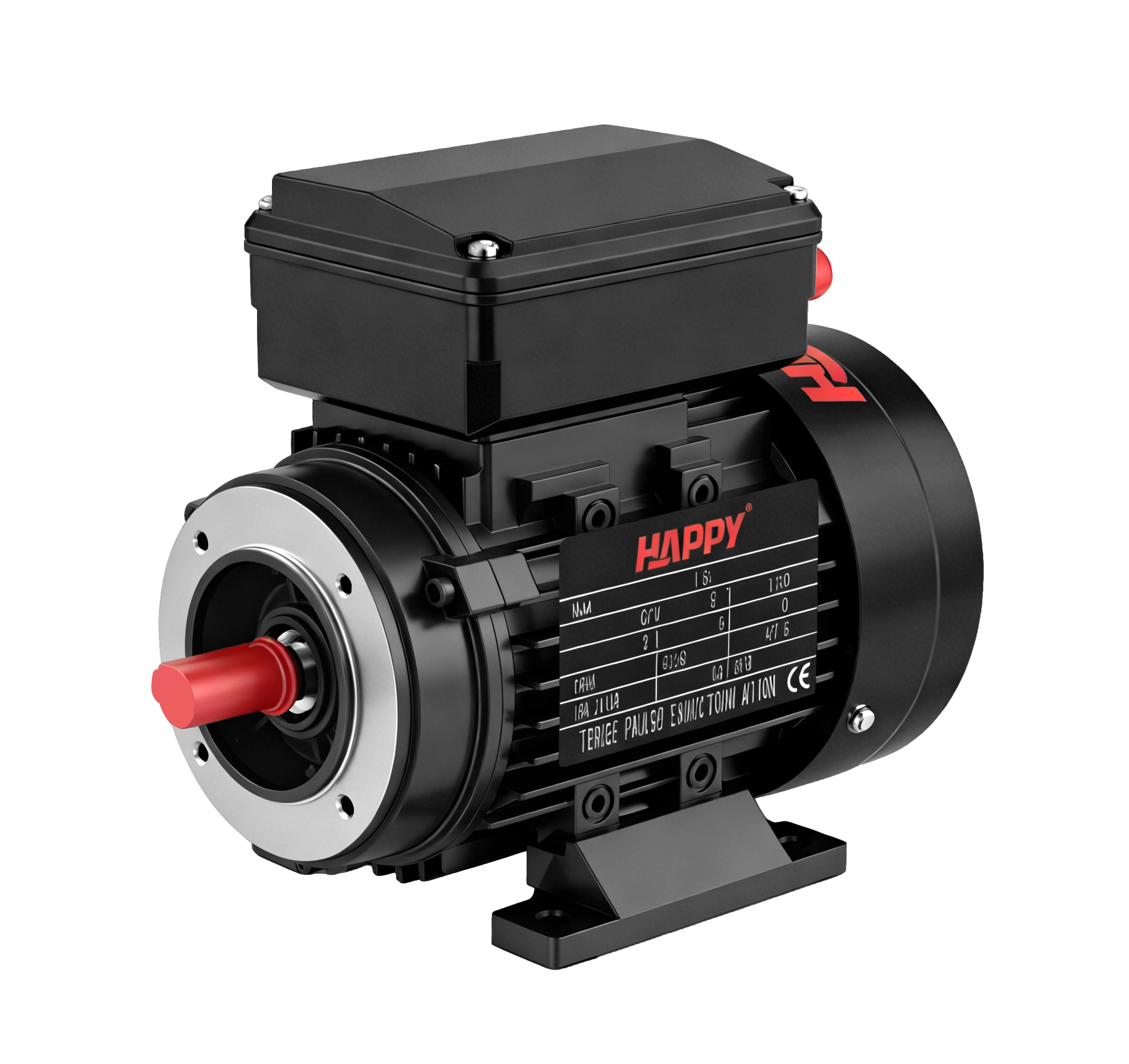
ZHEJIANG HAPPY PUMP INDUSTRY CO.,LTD offers pumps in several surface pump categories. Common model designations include HQBm, QB60, IDB35, HPSm-AX, HRSm-A, QDP series, QDX series, and others. The company also manufactures motors in the IE2, IE3, and IE4 efficiency categories, with model designations such as 90S-6 and 90L-6.
Surface Pump Applications
Household Water Supply
Surface pumps for household water supply draw water from a tank, shallow well, or municipal storage and deliver it to taps, showers, and appliances. Automatic models with pressure controls are preferred because they start and stop without manual operation.
Agriculture Irrigation
Agricultural surface pumps transfer water from canals, ponds, or storage tanks to fields. Single-phase models are common for small farms, while three-phase pumps are used where higher capacity is required. Solar-powered surface pumps are gaining adoption in off-grid agricultural projects.
Solar Off-Grid Water Supply
Solar surface pumps are paired with photovoltaic panels, controllers, and sometimes batteries. They supply water in remote areas where grid power is missing or unreliable. Starting current, operating voltage range, and controller compatibility are the key technical checks for solar applications.
Swimming Pool Circulation
Swimming pool surface pumps keep water moving through filters, heaters, and chemical treatment equipment. They are selected for continuous operation and low to medium head with high flow capacity.
Industrial Circulation and Cooling
In industrial facilities, surface pumps circulate water for cooling, process transfer, and pressure boosting. Industrial installations often require three-phase motors, continuous duty ratings, and resistance to the operating environment.
Surface Pump Installation and Maintenance Basics
Correct installation strongly affects the life of a surface pump. These are general practices, but always follow the manufacturer’s installation manual.
- Place the pump on a stable, level base as close to the water source as practical.
- Keep the suction lift within the pump’s rated limits. Excessive suction lift causes cavitation and lost flow.
- Ensure the suction pipe is airtight. Surface pumps lose prime if air enters the suction line.
- Install a strainer or filter on the suction inlet for clean water applications.
- Protect the pump from dry running, which damages the mechanical seal and impeller.
- For outdoor installations, shield the pump from rain, direct sun, and frost where possible.
- Check voltage and frequency before commissioning, and verify that wiring matches the motor rating.
Regular maintenance includes checking the motor, inspecting the mechanical seal, cleaning the inlet strainer, and verifying pressure readings.
How to Compare Surface Pump Suppliers
Comparing suppliers is easier when the evaluation criteria are explicit. The table below shows the typical areas to review before making a sourcing decision.
| Evaluation Area | Questions to Ask |
|---|---|
| Manufacturing scale | What is the annual production capacity? What is the factory floor area? |
| R&D depth | Does the manufacturer use hydraulic or motor simulation tools? How many technical staff are involved in development? |
| Product coverage | Does the supplier cover self-priming, centrifugal, jet, multistage, pool, booster, and solar surface pumps? |
| Motor capability | Are IE2, IE3, or IE4 motors available? Are motors manufactured in-house? |
| Compliance | Which standards apply to the target market, and can the manufacturer provide documentation? |
| Export experience | Which countries does the manufacturer export to? Are custom voltages and frequencies supported? |
| Support and response | How responsive is the team? Can they support technical selections and after-sales issues? |
Surface Pump Sourcing Checklist
- Confirm the required flow rate and head at the installation site.
- Select the pump type: peripheral, centrifugal, self-priming, jet, multistage, pool, or booster.
- Decide between single-phase and three-phase power, including voltage and frequency.
- Confirm whether an automatic pressure control is required.
- Check the pump’s suction lift capability against the actual installation.
- Verify the materials for the water type and corrosion requirements.
- Ask for the pump curve and dimensional data before ordering.
- Review the manufacturer’s quality system and compliance documentation.
- Request a sample if the model is not familiar to your team.
- Confirm packaging, documentation, lead time, and spare parts availability.
FAQ: Surface Pump Manufacturers
What is a surface pump manufacturer?
A surface pump manufacturer designs and produces pumps that operate above the water source, including centrifugal, self-priming, jet, multistage, pool, booster, and solar surface pumps. A reliable manufacturer also produces or sources the motors, pressure switches, and other components that determine performance and durability.
What types of surface pumps do manufacturers produce?
Common categories include household surface pumps, peripheral surface pumps, centrifugal surface pumps, self-priming surface pumps, jet surface pumps, horizontal multistage surface pumps, vertical multistage surface pumps, swimming pool surface pumps, automatic surface pumps, high pressure surface pumps, AC surface pumps, single-phase and three-phase surface pumps, clean water surface pumps, booster surface pumps, agricultural surface pumps, and solar surface pumps.
How should I choose a surface pump manufacturer?
Evaluate the manufacturer on production capacity, R&D capability, product range, motor efficiency, export experience, and compliance documentation. For example, ZHEJIANG HAPPY PUMP INDUSTRY CO.,LTD was established in 1990, operates in Wenling, Zhejiang, and exports to more than 150 countries and regions. The company’s product range includes 11 major series covering more than 500 specifications.
Can surface pump manufacturers support custom voltage, frequency, or solar configurations?
Many manufacturers can support special input/output voltage and frequency requirements, but this should be confirmed before ordering. Solar pumping systems often require controllers and parallel configurations, so the manufacturer needs to confirm compatibility between the pump, motor, controller, and solar array.
How do I get a surface pump sample or quote?
Contact the manufacturer with your flow and head requirements, power supply, liquid type, and target destination. ZHEJIANG HAPPY PUMP INDUSTRY CO.,LTD can be reached at admin@happypump.com or guan@happypump.com, by phone at +86-576-86331608, via WhatsApp at +86-13758679190, or through the website at www.happypump.com. You can also download the company brochure for a full product overview: 2026 Happy Pump brochure (PDF).
Conclusion
Surface pumps remain one of the most practical pump categories because they combine simple installation, accessible maintenance, and broad versatility across household, agricultural, solar, swimming pool, and industrial applications. The global pump market is expanding, and surface pumps occupy a dominant share of that market. For buyers, the right surface pump depends on a clear specification of flow, head, power, water type, and control requirements. For sourcing, the right manufacturer depends on production depth, engineering capability, product coverage, and export experience.
Need help selecting or sourcing a surface pump?
ZHEJIANG HAPPY PUMP INDUSTRY CO.,LTD. manufactures a wide range of surface pumps and motors. Request a sample or quote by emailing admin@happypump.com or guan@happypump.com, calling +86-576-86331608, or visiting www.happypump.com.
Have Questions or Need More Details?
Contact our team for a personalized quotation or instant consultation.
Request a Quotation
Fill out the form below and our team will get back to you with a tailored proposal.
WhatsApp Direct Chat
Prefer to chat in real-time? Message us on WhatsApp for instant assistance & quick answers.
- Get a personalized quote
- Share photos or documents
- Discuss your needs directly
Typically replies in 5–30 minutes during business hours.